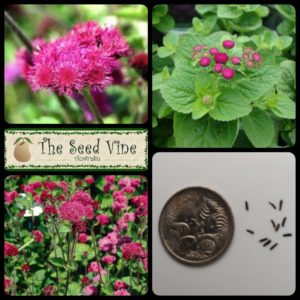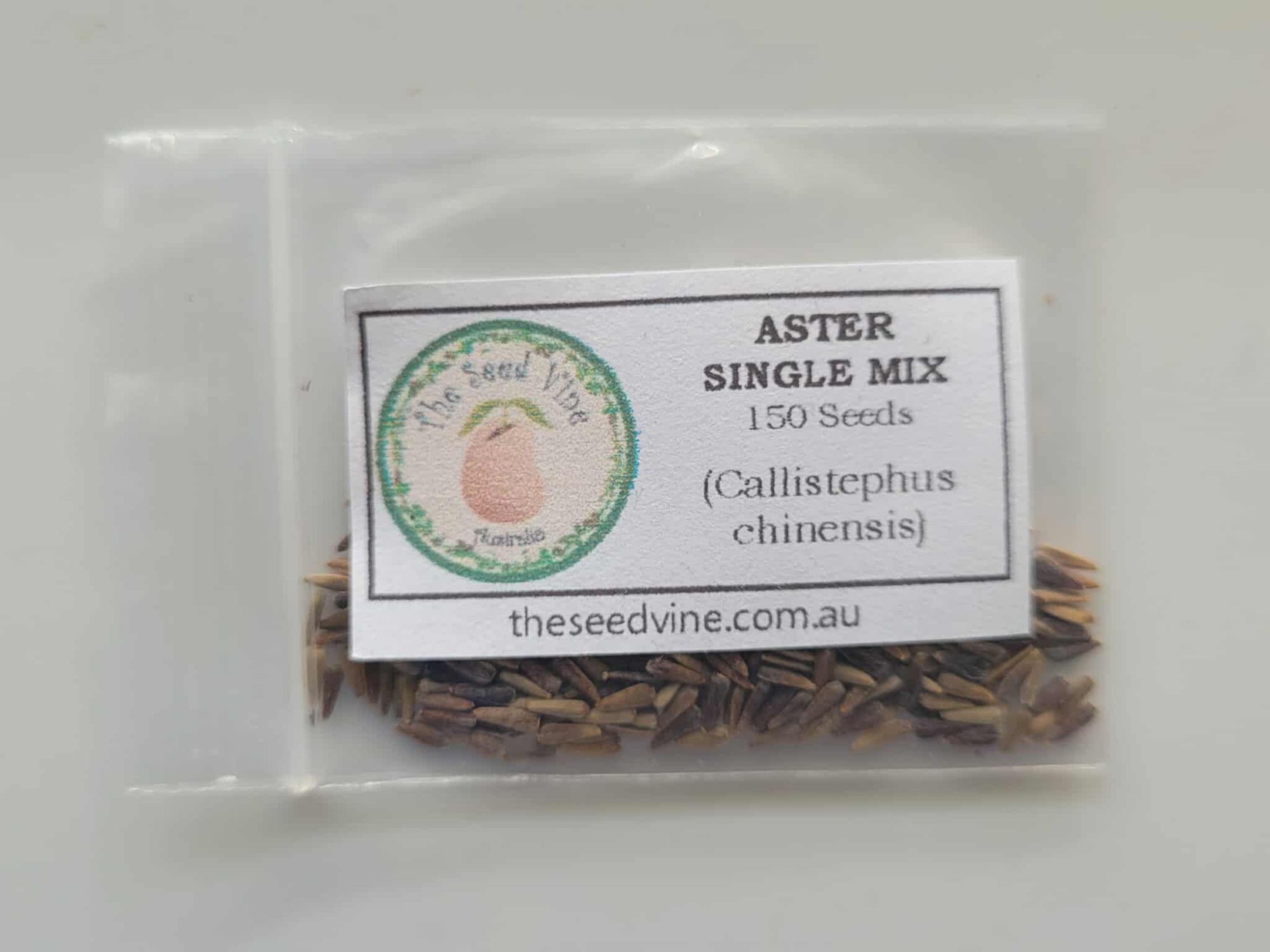
Aster Single Mix ( Callistephus chinensis) is an annual flowering plant that is native to China and Korea. It is cultivated around the world as a popular cut flower and for use in cottage gardens. This mixed variety is single petalled and produces a range of colours that includes white, purple, blue, yellow, red and pink.
Suitable for Temperate, Sub Tropical and Tropical climates.
This specific variety of Aster, the Aster Single Mix is ideal for containers, garden beds and make excellent border plants. They can grow like biennials in warmer climates or as annuals that will self-seed for future seasons in cooler climates.
Growth
Aster Single Mix is an annual flower that grows to a height of around 60cm (24 inches) and requires roughly 30cm (12 inches) spacing between plants. The basal, alternately arranged leaves vary in shape and size and generally fall off prior to flowering.
Large solitary flowers grow on top of stems and can range in many colours. The flowering period usually runs from late Summer to mid-Autumn.
FAMILY:
Asteraceae
CLIMATE:
Temperate to Tropical
TEMPERATURE RANGE:
12 to 40°C / 53 to 104°F.
SOIL TYPE:
Nutrient rich and well draining.
LOCATION:
Full sun, 6 hours of sunlight.
HEIGHT:
Up to 60 cm (24 inches)
WIDTH:
Up to 20cm (8 inches)
pH:
6.0-7.5
GROWTH TYPE:
Annual, although can grow as biennials in warmer climates.
WATER REQUIREMENTS:
Medium
POLLINATION:
Bee.
MATURITY:
100 days.
GERMINATION RATES:
80-85%
GERMINATION TIME:
7-14 days
SEEDS PER GRAM:
Approximately 500
MEDICINAL QUALITIES:
Yes
WEED POTENTIAL:
No.
EDIBLE:
Yes.
SEED STORAGE & VIABILITY:
Cold Storage at 4°C (Fridge) up to 3 years.
FACTS ABOUT ASTERS
Asters have been in cultivation in Europe since around 1728.
Asters are an edible flower and have been used in salads, soups, and herbal teas, particularly by native Indians in North America. The young leaves can be eaten raw in salads or cooked lightly as greens. Aster flowers can be used as garnishes or added to herbal teas.
Asters have a traditional medicinal use in treating diarrhea and indigestion by using the flowers as part of a herbal tea. As a poultice the flowers can also be applied to the skin to reduce damage caused by free radicals.