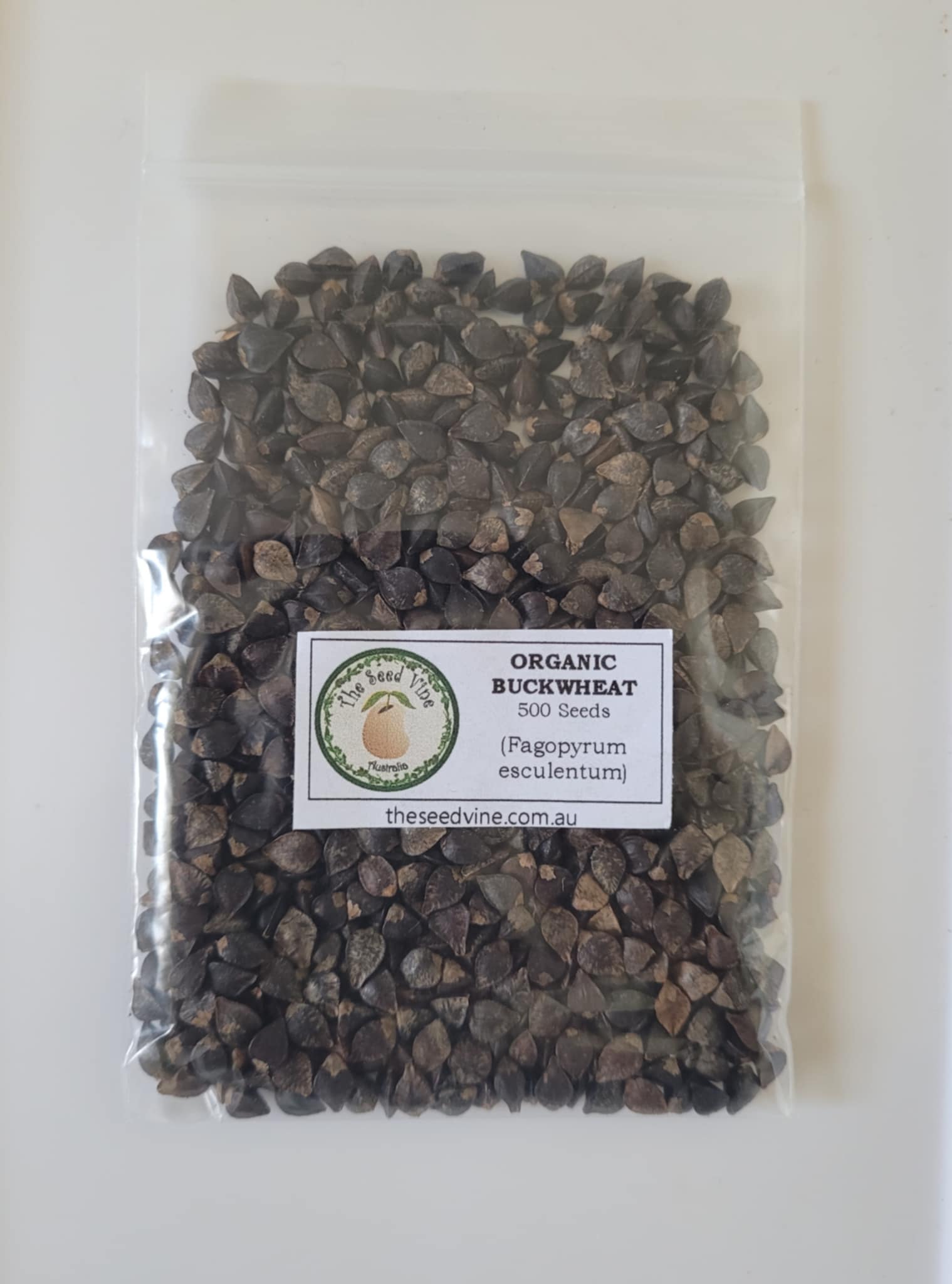
Buckwheat ( Fagopyrum esculentum ) is an annual crop plant that is native to south-central Asia and Tibet. In recent times, it is more commonly grown for its gluten-free seeds that are substitutes for wheat products. But for centuries Buckwheat has been grown for its medicinal properties, livestock feed, soil improvement and as a fast-growing sustainable food source.
Suitable for Temperate (Warmer seasons), Sub-Tropical and Tropical climates.
Not only is Buckwheat a popular gluten-free alternative, it has several health benefits as a good source of dietary fibre, protein and antioxidants. As a grain, it is used to make a flour that makes pasta, noodles and bread related products.
In herbal medicine, it has been used to treat high blood pressure, gout, varicose veins, radiation damage as well as for restoring milk production in nursing mothers.
Although it is called Buckwheat, it is not related to Wheat, but is botanically closer to Sorrel, Knotweed and Rhubarb.
Growth
Fagopyrum esculentum is a herbaceous flowering plant that can grow as tall as 120 cm (4 feet) and up to 50cm (20 inches) wide. Buckwheat succeeds in cold climates such as northern Europe, but only when grown during the Summer. In warmer climates, it can be sown after the brutal hot summer and be ready to harvest as the weather begins to cool.
Buckwheat thrives in soils that are low in nutrients, slightly acidic or even boggy or clayish soils. It rewards the grower by improving the soil quality for future crops and is grown in many countries only for this purpose. Flowering plants attracts many pollinators which can help to improve the yield of nearby companion plants such as fruit trees.
When the seeds are sown in suitable growing conditions, the Buckwheat plant takes between 70-90 days to reach maturity.
Note: Germination instructions can be found in the ‘Germination Instructions Tab’ below. Upon purchase you will receive these detailed instructions via email so that you have a permanent record.
FAMILY:
Polygonaceae
CLIMATE:
Temperate to Tropical
TEMPERATURE RANGE:
15 to 35°C / 59 to 95°F
SOIL TYPE:
Suitable for all soil types as long as the temperature is warm.
LOCATION:
Full sun.
HEIGHT:
Up to 125 cm (4 feet)
WIDTH:
Up to 50cm (20 inches)
pH:
5.5-7.0
GROWTH TYPE:
Annual
WATER REQUIREMENTS:
Medium
POLLINATION:
Pollinated by bees & flies.
MATURITY:
70-90 days from seed.
GERMINATION RATES:
75-85%
GERMINATION TIME:
4-6 days
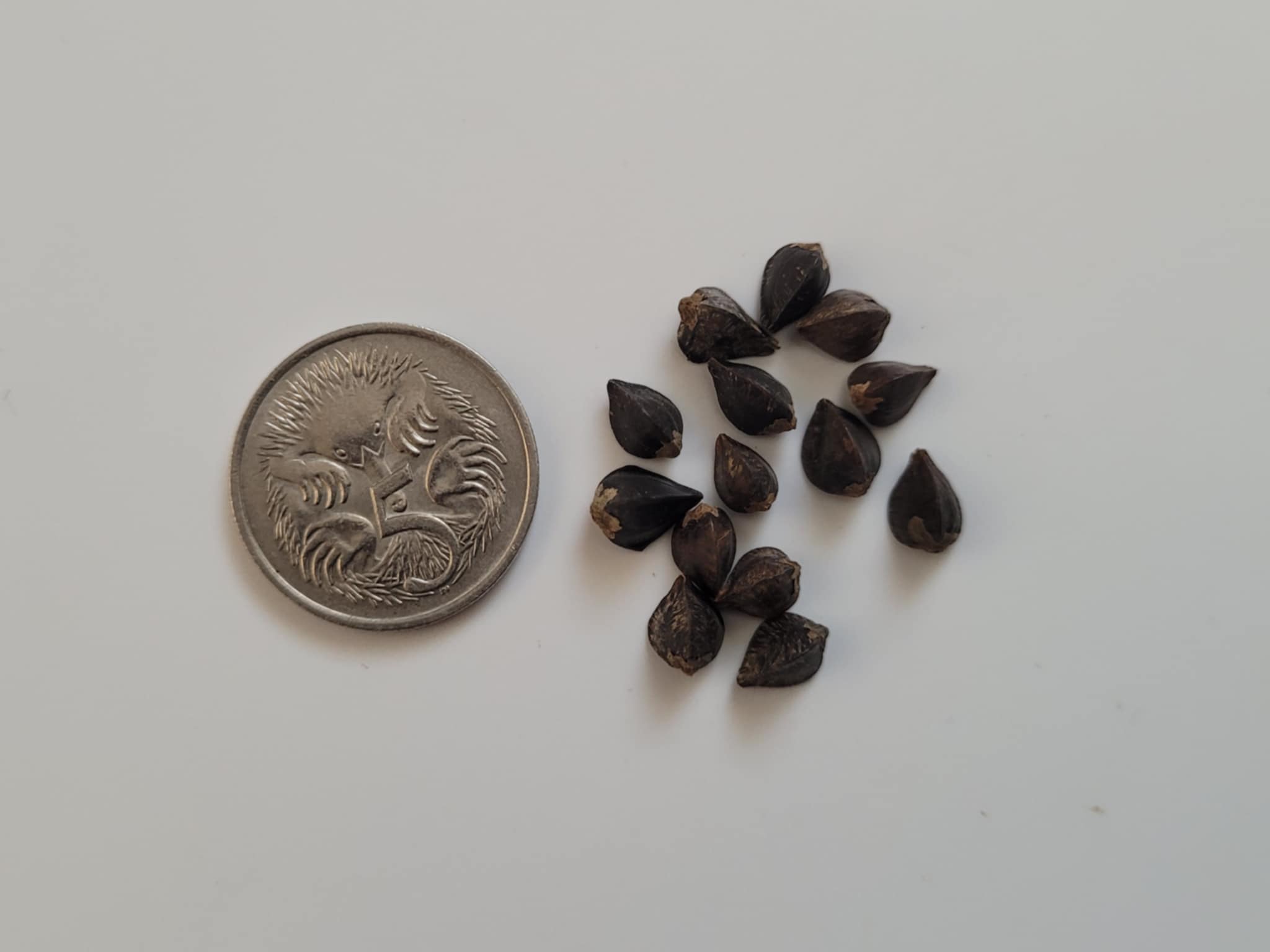
SEEDS PER GRAM:
Approximately 30
MEDICINAL QUALITIES:
Yes
WEED POTENTIAL:
No
EDIBLE:
Yes.
SEED STORAGE & VIABILITY:
Store a 4°C (fridge) for 2 years.
FACTS ABOUT FAGOPYRUM ESCULENTUM (Buckwheat)
A small amount of people can be allergic to Buckwheat. This seems to be most common with people that also have rice or latex allergies.
In Japan it is called ‘Soba’, Soba Noodles are made from Buckwheat.
Fagopyrum esculentum makes a very good cover crop and green manure soil improver. Cut the plants down as they reach flowering age and leave them to decompose .
In 2023, world production of Buckwheat was 2.2 million tonnes with 52% grown in Russia.