Filipendula ulmaria (Meadowsweet) is a perennial herb that is native to temperate regions of Europe and Western Asia. Meadowsweet is a useful herb that can grow in semi-shady, wet areas of the garden, produce long-season white flowers and provide a range of medicinal benefits. The plant itself has a long list of uses but is most famous for its part in the creation of aspirin.
Suitable for Temperate climates.
Filipendula ulmaria is also commonly known as Mead Wort, Queen of the Meadow, Bridewort, Meadow Queen, Lady of the Meadow, Meadsweet and Dollof. Meadowsweet dates back to the 16th century when it was used for sweetening mead. A century earlier it was literally called Meadsweet.
It was also known as Bridewort because it was often hung in churches for weddings and made into bridal garlands.
To view our full range of herbs click here.
Growth
Filipendula ulmaria is a clump-forming perennial that grows to a height of 1.2m (4 feet) by a width of 60cm (2 feet). Meadowsweet adapts to a wide range of soil conditions as long as it remains moist and can still produce flowers from a part-shady location. Natively, it is found next to riverbanks, under cover in woodlands and in marshes or meadows where the soil remains moist.
Features of the plant itself include tall bright red stems, dark green leaves and long-seasoned creamy white flowers. It will flower throughout the warmer months before going to seed in Autumn and then dormant during Winter.
Note: Germination instructions can be found in the ‘Germination Instructions Tab’ below. Upon purchase you will receive these detailed instructions via email so that you have a permanent record.
FAMILY:
Rosaceae
CLIMATE:
Temperate
TEMPERATURE RANGE:
-10-27°C / 14-80°F
SOIL TYPE:
Moist, Boggy and Sandy soils.
LOCATION:
Part-Shade (Full Sun, if soil is constantly kept moist)
HEIGHT:
Up to 1.2m (4 feet)
WIDTH:
Up to 60cm (2 feet)
pH:
5.0-7.0
GROWTH TYPE:
Perennial.
WATER REQUIREMENTS:
Medium
POLLINATION:
Bees, Flies and Beetles.
MATURITY:
180-200 days
GERMINATION RATES:
60-75%
GERMINATION TIME:
14-21 days at temperatures between 10-15°C / 50-59°F
GERMINATION DIFFICULTY:
Easy
SEEDS PER GRAM:
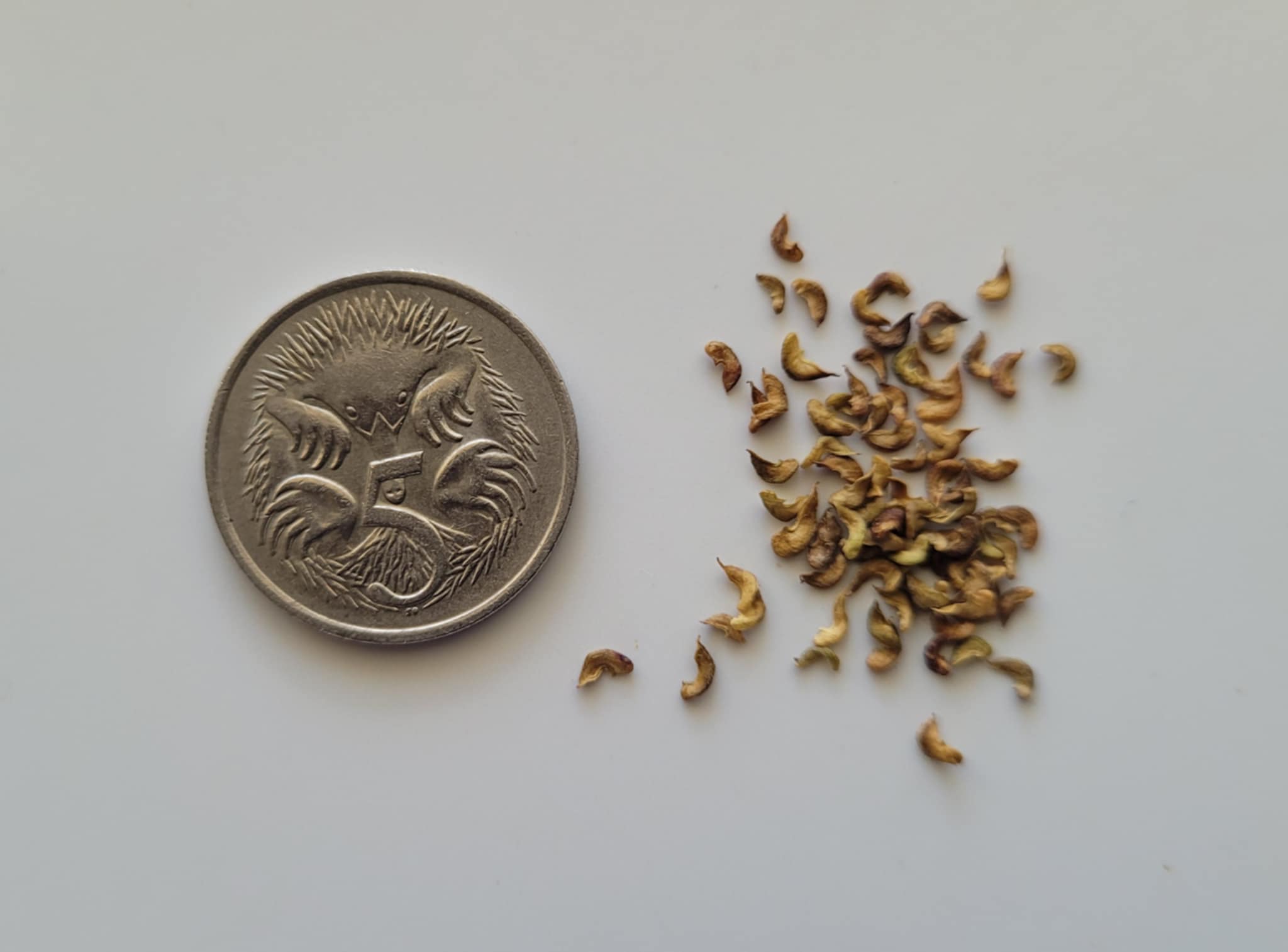
Approximately 2500
MEDICINAL QUALITIES:
Yes
WEED POTENTIAL:
No.
EDIBLE:
Yes.
SEED STORAGE & VIABILITY:
Cold Storage at 4°C (Fridge) up to 5 years.
FACTS ABOUT FILIPENDULA ULMARIA (Meadowsweet)
The botanical name Filipendula ulmaria has an interesting translation. Ulmaria means ‘elmlike’ in reference to the leaves that are similar to elms. Filipendula, comes from the word filum, meaning “thread” and pendulus, meaning “hanging”. This is said to describe the slender attachment of root tubers, which hang on the fibrous roots.
Beforehand, the previous botanical name was Spiraea ulmaria which inspired the name of the famous pain reliever Aspirin. The active ingredient, Salicylic Acid, was first discovered by Raffaele Piria in 1838 but it would take to the turn of the 20th century for Bayer to synthesise the aspirin we know today.
In traditional medicine, the herb Meadowsweet is used as pain relief and for treating diarrhoea, blood afflictions, sores, ulcers, heartburn, gastritis and pneumonia.
A tea made from the flowers or leaves has been used in traditional Austrian herbal medicine for the treatment of gout, infections and fever.
For more information on Meadowsweet please click here.