Marrubium vulgare ( White Horehound ) is a perennial plant that is native to Europe, northern Africa and central Asia. White Horehound has been used for centuries in traditional medicine to assist with coughs and colds. As part of the mint family, the herb also makes an excellent companion plant and is highly attractive to bees.
Suitable for Temperate, Dry and Sub-Tropical Climates.
Marrubium vulgare is also known as Common Horehound and has been found in Roman literature as far back as the 1st century. There it was a herb used to treat respiratory issues and to rid livestock of parasites.
In modern medicine, it is an ingredient found in many throat lozenges and in Germany is considered a treatment for colds and indigestion. As a species, the plant can become invasive and has successfully spread to every continent except Antarctica.
To view our full range of herbs click here.
Growth
Marrubium vulgare is a herbaceous perennial that grows to the humble size of about 60cm in height by 90cm in width. White Horehound succeeds in most soils that aren’t boggy, is tolerant of dry and poor soils and can withstand cold winters with heavy frosts. Plants prefer a warm, sunny position and can become invasive so growing in containers or garden beds is recommended.
The leaves are grey in colour, up to 5cm long with a crinkled surface and are covered in hairs. Flowers are borne on clusters on the upper part of the stem and are white in colour. Plants flourish where the soil contains plenty of nitrogen and make an excellent companion when grown near tomatoes. Known to assist tomatoes to produce longer and heavier harvests.
If pruned after the flowering period, the White Horehound will produce a second crop of leaves. Plants are harvested as they come into flower and can be used fresh or dried.
Note: Germination instructions can be found in the ‘Germination Instructions Tab’ below. Upon purchase you will receive these detailed instructions via email so that you have a permanent record.
FAMILY:
Lamiaceae
CLIMATE:
Temperate, Dry and Sub-Tropical
TEMPERATURE RANGE:
-10-30°C / 14-86°F
SOIL TYPE:
Well-draining, dry, low-nutrients.
LOCATION:
Full Sun or Part-Sun.
HEIGHT:
Up to 60cm (2 feet)
WIDTH:
Up to 90cm (3 feet)
pH:
6.5-7.5
GROWTH TYPE:
Perennial.
WATER REQUIREMENTS:
Light
POLLINATION:
Bees
MATURITY:
18-24 months.
GERMINATION RATES:
70-90%
GERMINATION TIME:
Cold Stratification for 4 weeks and then 14-28 days at temperatures around 20°C / 68°F.
GERMINATION DIFFICULTY:
Medium
SEEDS PER GRAM:
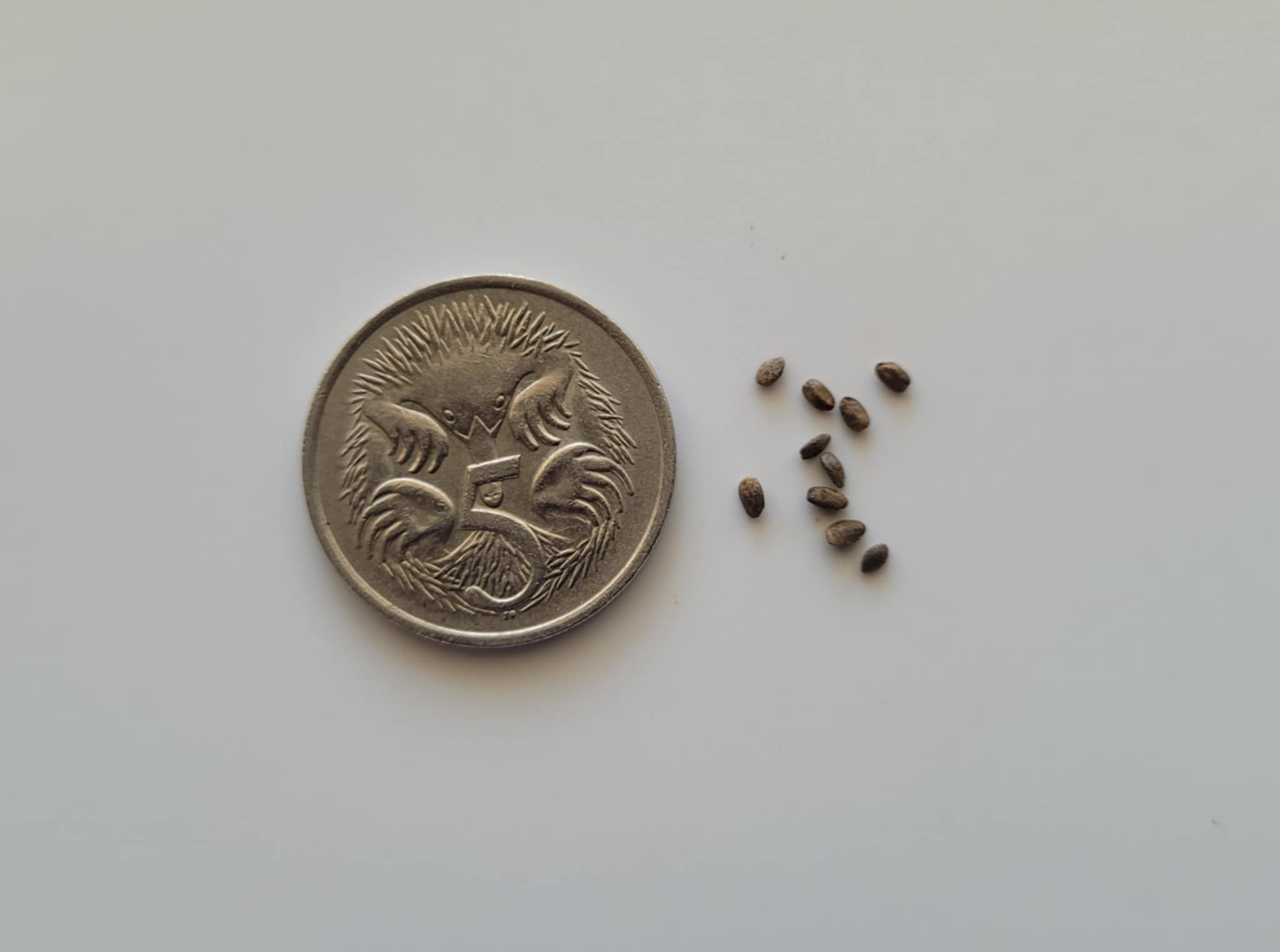
Approximately 1100
MEDICINAL QUALITIES:
Yes
WEED POTENTIAL:
Yes.
EDIBLE:
No
SEED STORAGE & VIABILITY:
Cold Storage at 4°C (Fridge) up to 5-7 years.
FACTS ABOUT MARRUBIUM VULGARE (White Horehound)
An essential oil is obtained from Marrubium vulgare which is used to flavour liquors and to treat trees that have with cankerworms.
Due to its bitterness, it is often made into lollies or syrups. White Horehound is well-known in this form for its use in treating colds, coughs and wheeziness. The flowers and stems are antiseptic, diuretic, expectorant and a stimulant and tonic that is also safe to use with children.
One traditional folk medicine recipe involves equal parts White Horehound combined with Plantain to treat bites from rattlesnakes.
In traditional agriculture, Marrubium vulgare was grown near crops to help repel grasshoppers and was fed to livestock to expel worms.
For more information regarding the White Horehound please click here.