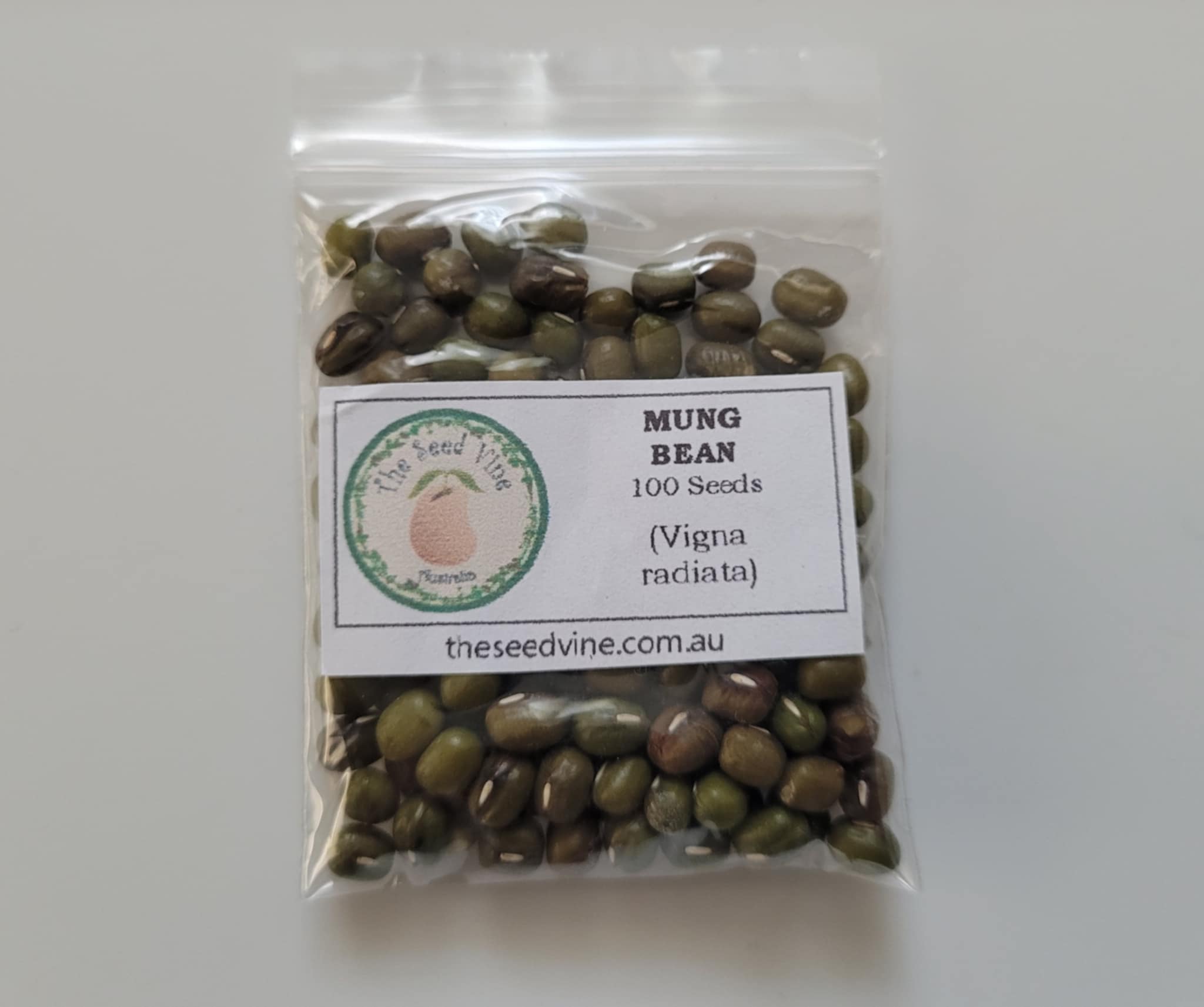
Vigna radiata (Mung Bean) is an annual vine and food crop that is native to tropical regions in southern and eastern Asia. The Mung Bean is fast-growing, high in protein and is widely grown for its nutritious seeds and sprouts which can be ready to harvest in around 90 days.
Suitable for Temperate, Sub-Tropical and Tropical climates.
Vigna radiata is also commonly known as Mung, Mongo Bean, Jerusalem Pea and Golden Gram.
Growth
Vigna radiata is a fast-growing annual vine that grows to a height of around 1.25m (4 feet) by a width of 50cm (2 feet). Mung Beans thrive in warm, moist climates in full sunlight but can be damaged or killed during frost or even temperatures as low as 5°C / 41°F.
Seeds can be sown directly into the ground after the last frost but in cooler climates are usually started indoors where they can enjoy germination temperatures above 15°C / 62°F.
In western culture, Mung Beans are more often grown as sprouts where they can conveniently be grown in a glass on the kitchen window sill or bench.
If grown outdoors, Mung Beans take around 90-120 days while sprouts can be ready within 2-4 days, depending on conditions.
Note: Germination instructions can be found in the ‘Germination Instructions Tab’ below. Upon purchase you will receive these detailed instructions via email so that you have a permanent record.
FAMILY:
Fabaceae
CLIMATE:
Temperate, Sub Tropical and Tropical
TEMPERATURE RANGE:
10 to 30°C / 50 to 86°F
SOIL TYPE:
Warm moist soils.
LOCATION:
Full Sun.
HEIGHT:
Up to 1.25m (4 feet)
WIDTH:
Up to 50cm (20 inches)
pH:
6.0-7.5
GROWTH TYPE:
Annual.
WATER REQUIREMENTS:
Light
POLLINATION:
Bees, Butterflies and Hummingbirds.
MATURITY:
90-120 days (2-4 days for sprouts)
GERMINATION RATES:
80-95%
GERMINATION TIME:
5-7 days
GERMINATION DIFFICULTY:
Easy
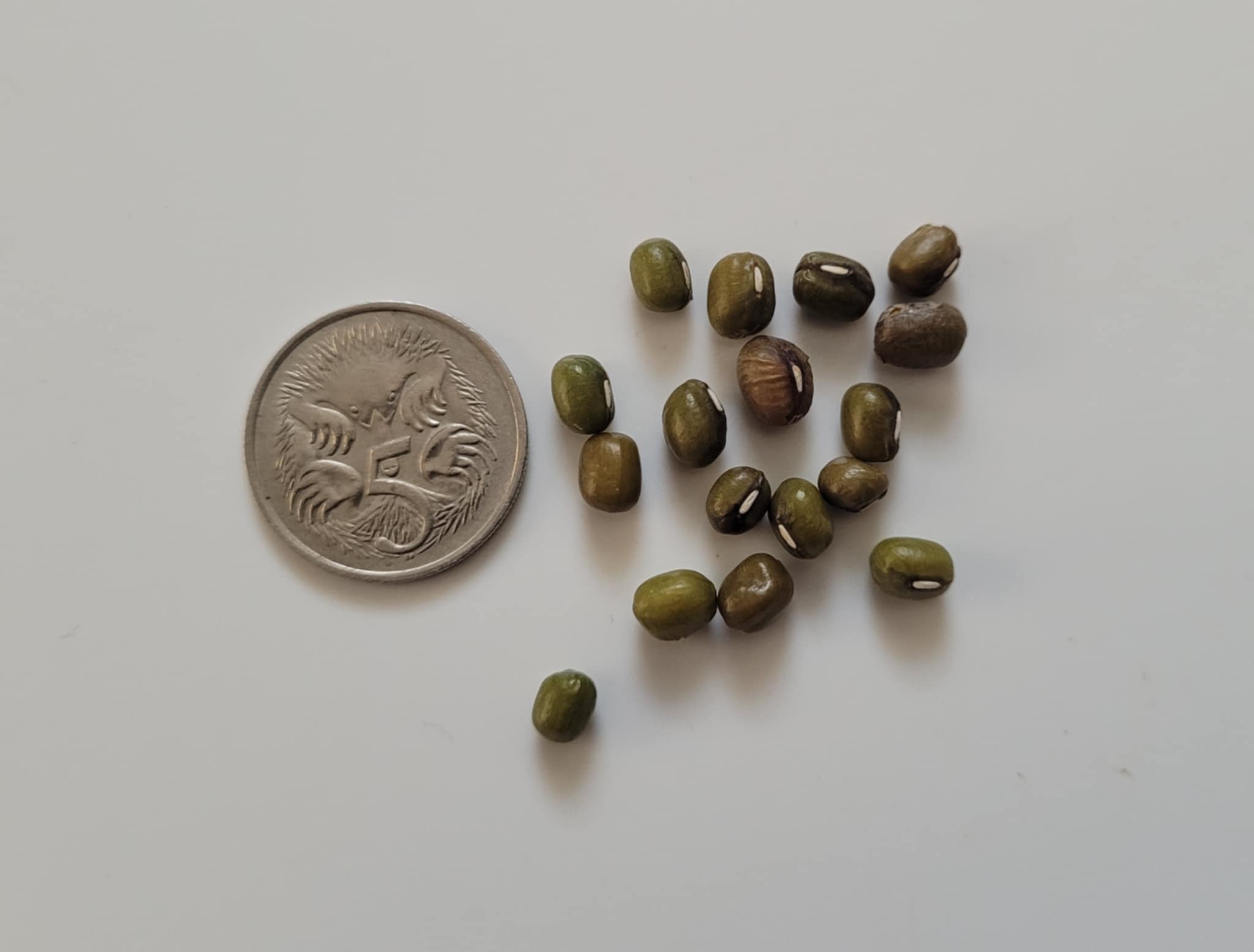
SEEDS PER GRAM:
Approximately 13 seeds
MEDICINAL QUALITIES:
No
WEED POTENTIAL:
No
EDIBLE:
Yes
SEED STORAGE & VIABILITY:
Cold Storage at 4°C (Fridge) up to 18-24 months.
FACTS ABOUT VIGNA RADIATA (Mung Bean)
Mung Beans is among the nine grains in Vedic astrology and is associated with the planet Mercury or Budha. Carbonised Mung Beans have been found in many ancient sites throughout India and is one of the grains Rudra is asked to bless with a good harvest. Some discoveries date as far back as 4,500 years.
In Sri Lanka, Mung-Kavum is made as a traditional fried sweet and is often associated with New Year celebrations. Otherwise, it is commonly served with grated coconut, spicy chilli and onions at breakfast.
Raw Mung Beans contain almost 29 grams of protein per 100 grams and is widely grown in areas where meat is a luxury.
For more information regarding the Mung Bean please click here.