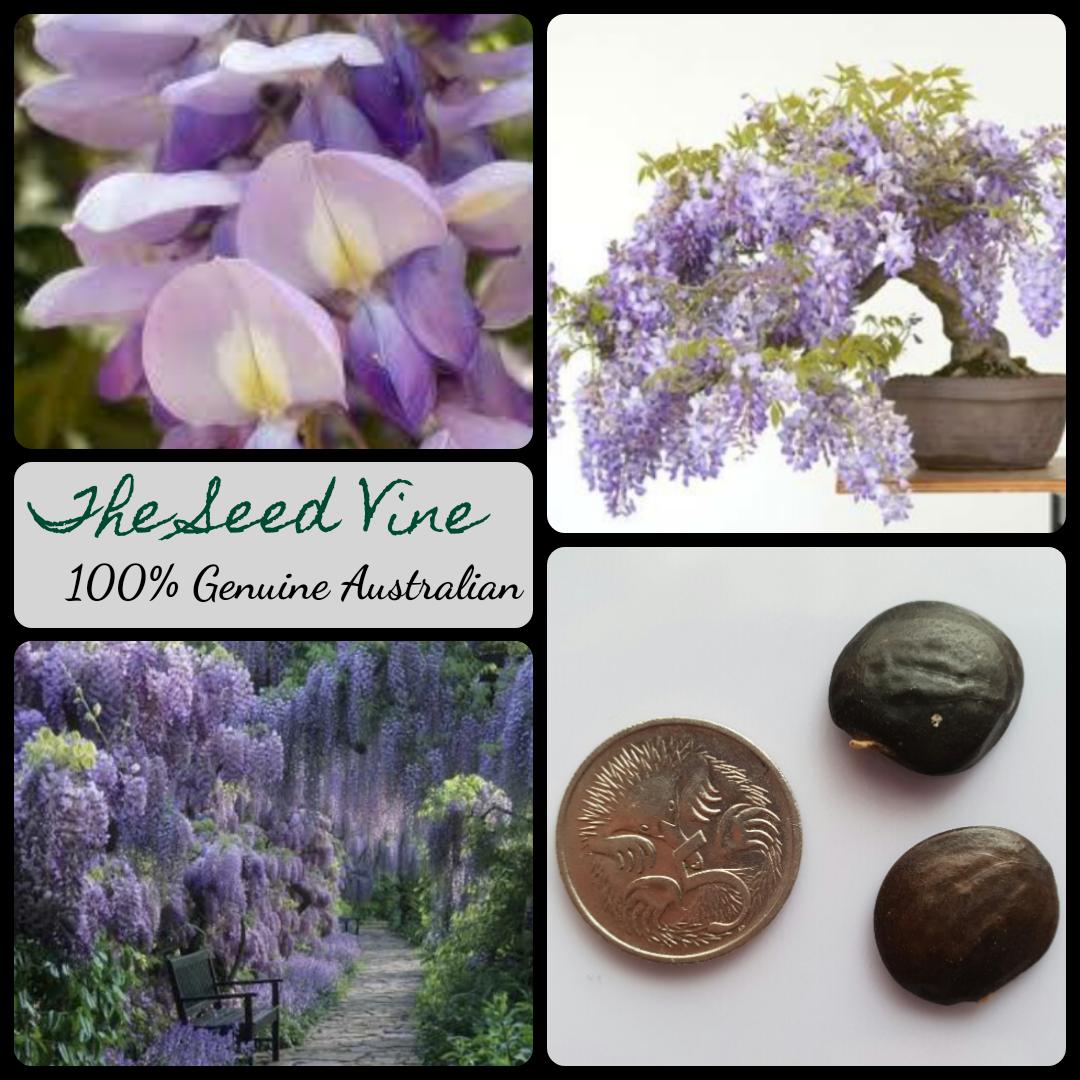
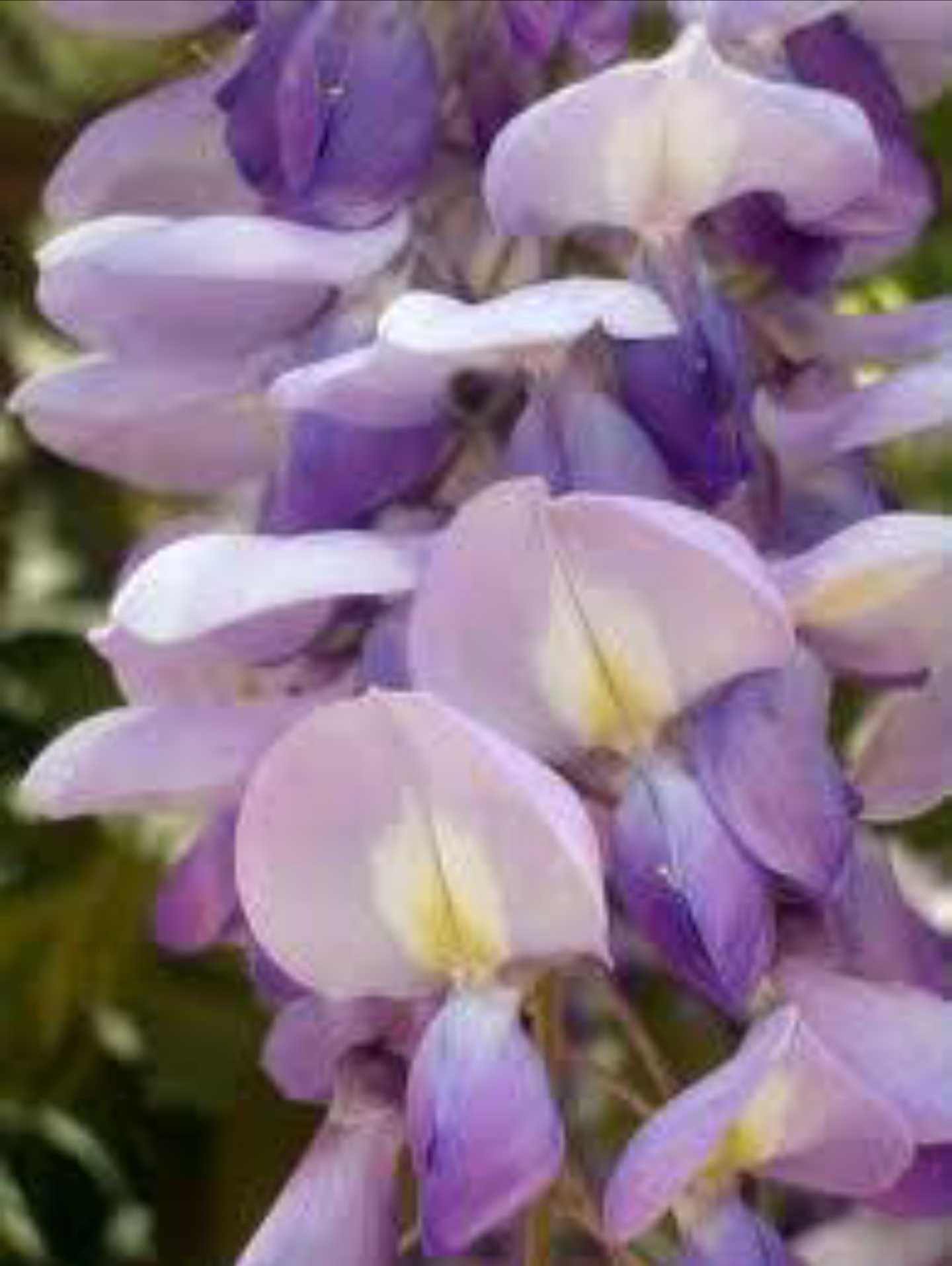
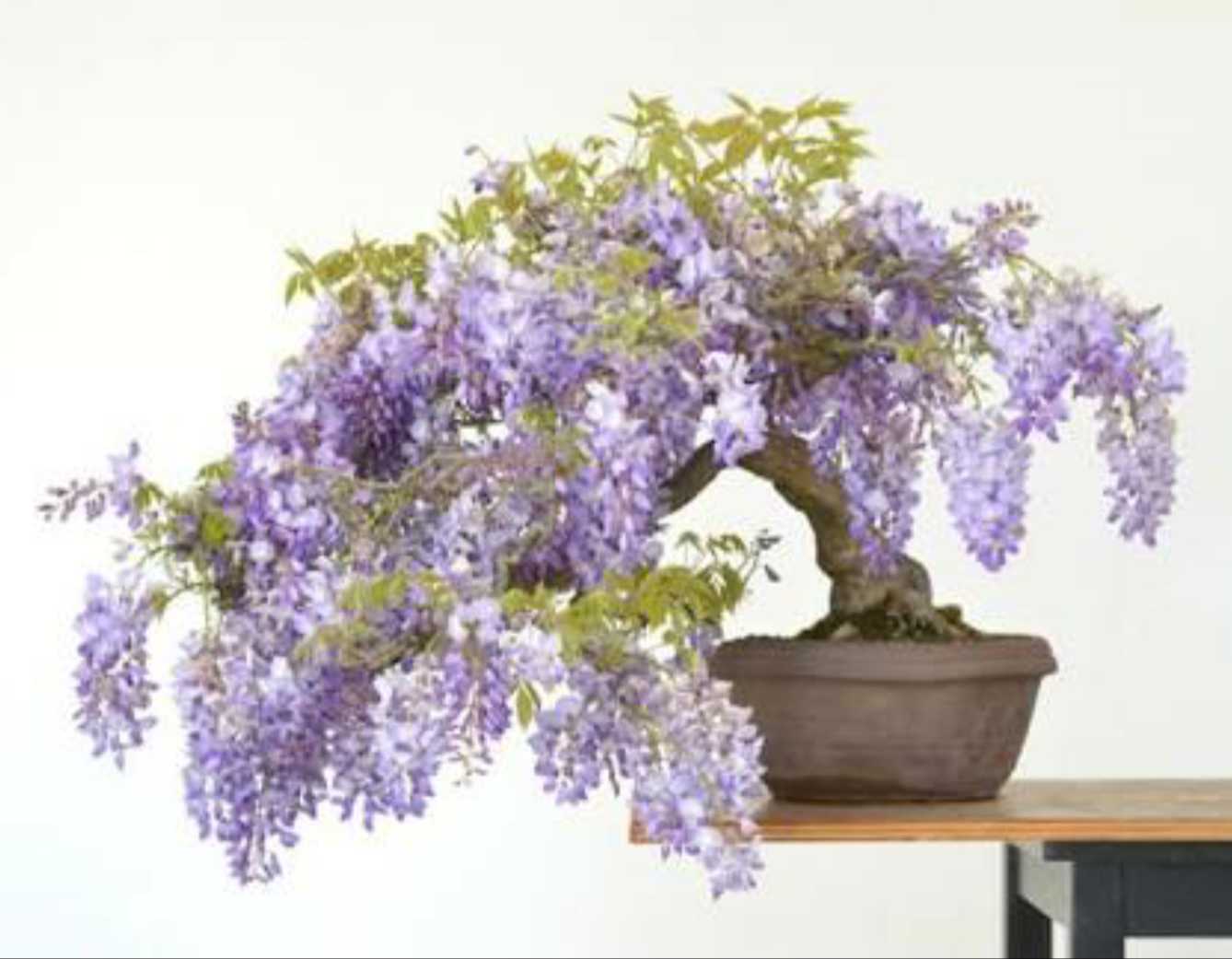
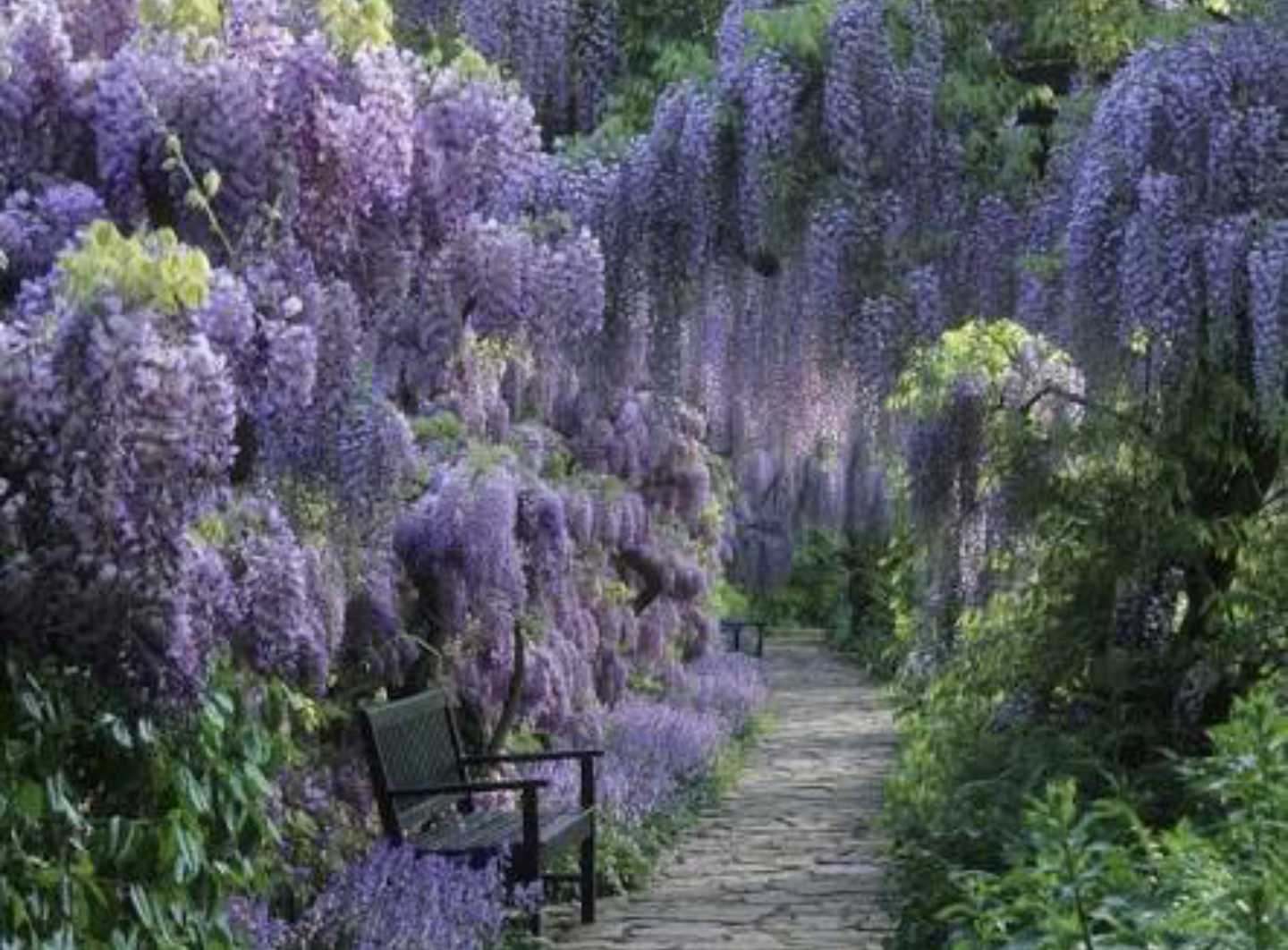
Wisteria sinensis (Chinese Wisteria) is a deciduous flowering vine that is native to China and widely grown in temperate regions for its beautiful purple flowers. Chinese Wisteria is a popular bonsai variety for its twisting, shapable branches and ability to succeed in shady locations. Commonly grown on arches, it produces highly fragrant flowers in Spring.
Suitable for Cold, Temperate and Sub-Tropical climates.
Wisteria sinensis is native to several provinces throughout China and is renowned for its ability to climb onto man-made structures. It does so growing in counter-clockwise direction and produces many scented flowers on hanging racemes in Spring.
All parts of a Chinese Wisteria plant contain glycoside which is toxic if ingested and can cause nausea, stomach pains, diarrhea and even gastroenteritis.
For more varieties that are ideal for bonsai growing click here.
Growth
Wisteria sinensis is a deciduous climbing tree that spreads to a height of around 25 metres (82 feet) and by a width of roughly 20 metres (65 feet). Chinese Wisteria prefers a good loamy, well-draining soil in a position of morning sun and sheltered from high winds.
Once transplanted, young trees can take several seasons to adapt but is often the result of soil with too much nutrients or a location with too much shade. Starting young trees in containers allows a method of moving them to find their best location and the ability to change the soil to suit.
When the trees become established they will require a trellis or a structure to grow upon and will thrive when given direction. Depending on conditions, it can take up to 20 years for trees to start flowering. Flowering occurs in mid-late Spring and are violet or white produced on racemes that grow up to 20cm (8 inches). Sometimes they can have a second flowering period in late-Summer.
The species is hermaphrodite, having both male and female organs, and is pollinated by insects.
Note: Germination instructions can be found in the ‘Germination Instructions Tab’ below. Upon purchase you will receive these detailed instructions via email so that you have a permanent record.
Fabaceae
FAMILY:
Fabaceae
CLIMATE:
Cold, Temperate and Sub-Tropical climates
TEMPERATURE RANGE:
-15 to 30°C / 5 to 85°F
SOIL TYPE:
Prefers poor soil that is well-draining.
LOCATION:
Part-Sun
HEIGHT:
Up to 25 metres (82 feet)
WIDTH:
Up to 20 metres (65 feet)
pH:
5.5-6.0
GROWTH TYPE:
Deciduous
WATER REQUIREMENTS:
Low
POLLINATION:
Insects
MATURITY:
10-20 Years
GERMINATION RATES:
65-75%
GERMINATION TIME:
Soak for 24 hours in water. Germination can take 3-4 weeks but can be up to 12 months.
GERMINATION DIFFICULTY:
Medium
SEEDS PER GRAM:
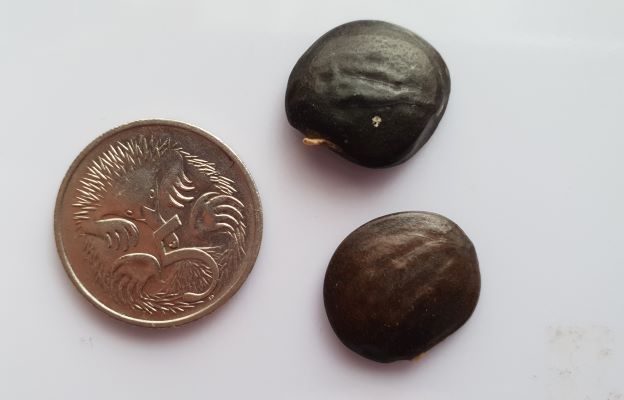
1-2
MEDICINAL QUALITIES:
No
WEED POTENTIAL:
Yes
EDIBLE:
No
SEED STORGE & VIABILITY:
Cold Storage at 4°C (Fridge) up to 3-4 years.
FACTS ABOUT WISTERIA SINENSIS (Chinese Wisteria)
The fibre from the stems of Wisteria sinensis can be used to make paper. Stems are harvested during Summer, the leaves removed and then steamed until the fibre can be stripped. The fibres are then cooked for 2 hours with lye and then put in a ball mill for three hours to produce a buff coloured paper.
A 200 year-old specimen in Chiswick, London is said to be the oldest living Wisteria plant in Great Britain. Another specimen started in 1892, in California, USA called the Sierra Madre Wisteria is recognised by Guinness Book of World Records as the world’s largest blossoming plant. By 1994, it had grown branches that stretched 152 metres (500 feet) long with the whole tree covering one entire acre.
Wisteria sinensis was first introduced to England in 1816 by the East India Company when working in China.