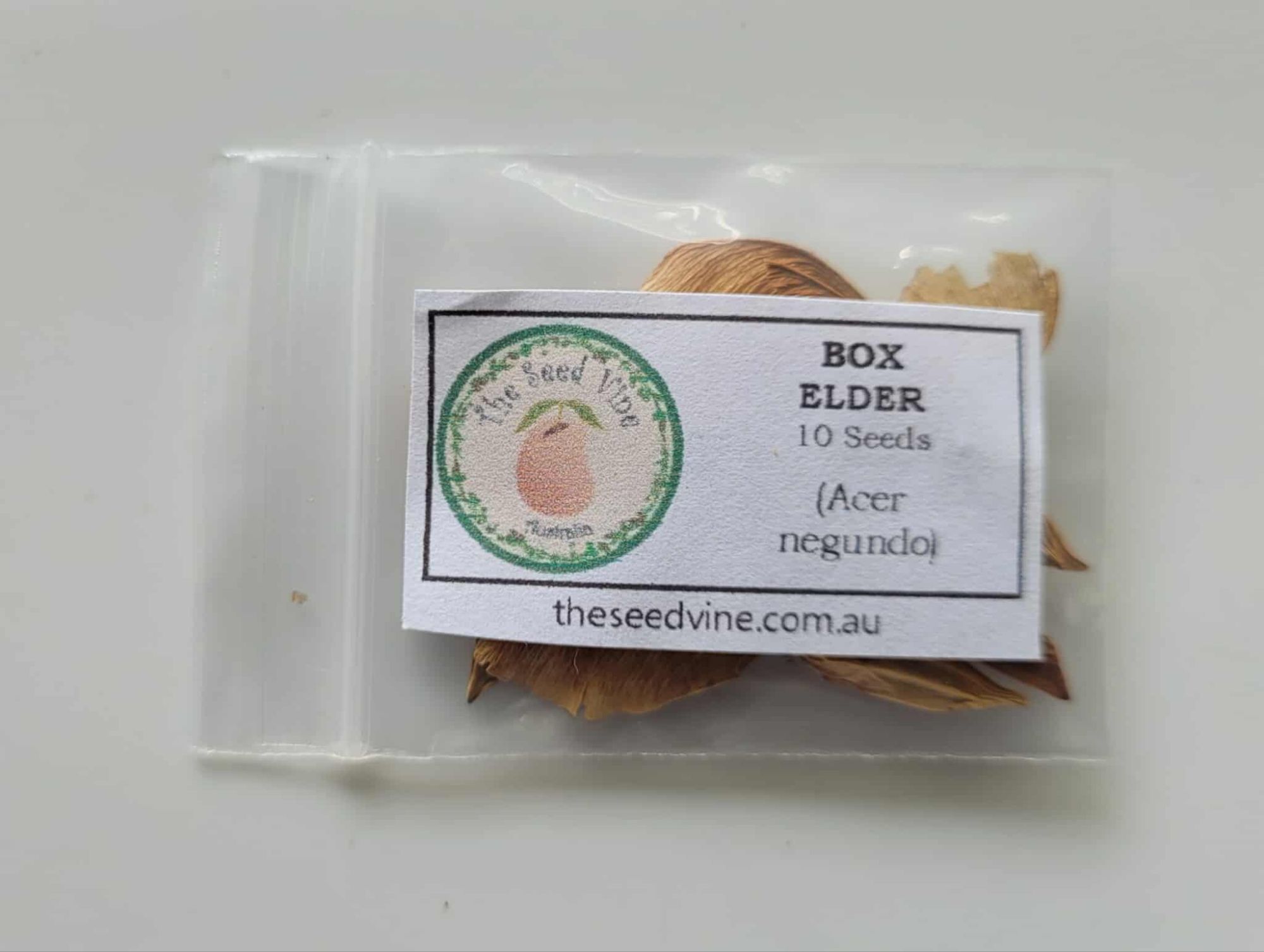
Acer negundo (Box Elder) is a fast-growing deciduous tree that is native to North America and widely used as an ornamental for its stunning Autumn colours. Compared to many maple varieties, the Box Elder adapts to both cold and warm climates and adapts to a range of different soil conditions. Commercially, this species is commonly used for rootstock to support specially bred maple hybrids.
Suitable for Cold, Temperate and Sub-Tropical climates.
Acer negundo has many common names that include the Manitoba Maple, Ash-Leaved Maple, Boxelder Maple, Negundo Maple, River Maple and the Russians simply call it the American Maple.
The Box Elder has been used worldwide as a street and landscape tree due to its fast-growth and adaptability but has also become an invasive weed to some countries including much of Europe, New Zealand and here in Australia.
Though botanists throughout history have debated its genus, it is part of the Acer family and is related to the Japanese Maple, Red Maple and the Sugar Maple.
Natively, this particular type of maple can be found in the cold, almost arctic-like, conditions of Canada as well as the warm, tropical climates of Mexico and Honduras.
Growth
Acer negundo is a deciduous tree that grows to a height of about 25 metres (80 feet) and width of up to 10 metres (33 feet). The Box Elder is fast-growing and can often produce several trunks along with thick branches and leaves, making it a popular shade tree.
Young trees develop well in a shady/partly-sunny location before growing tall enough to reach a position of full sun. The species prefers a consistently moist soil that provides good drainage, especially when grown in regions with high rainfall.
In contrast to most other maples which tend to have simple, palmately lobed leaves, the Acer negundo grows pinnately compound leaves that range from 3-7 leaflets. They grow a translucent green colour during the warmer months before turning yellow during Autumn.
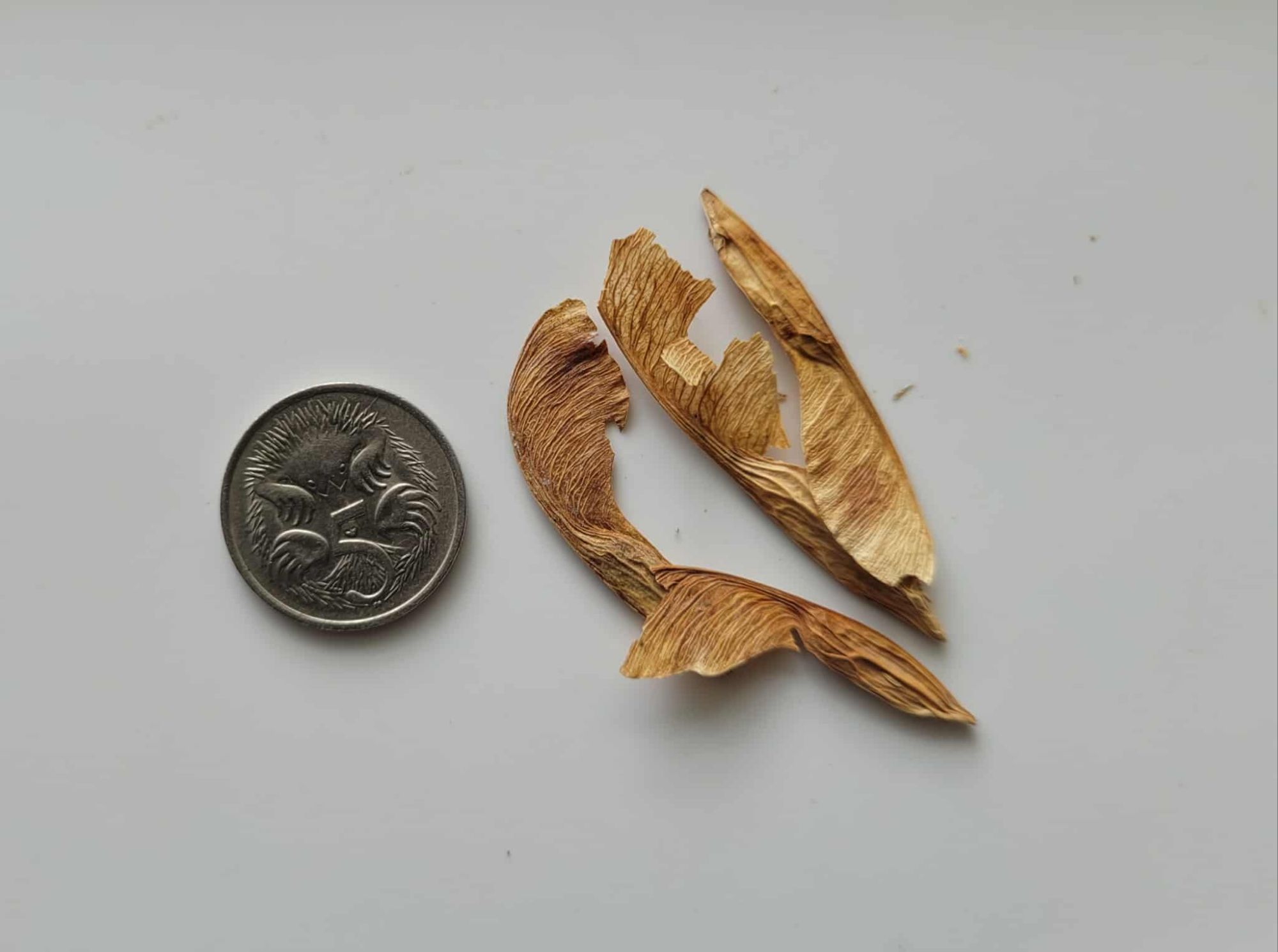
In early Spring, small yellow-green flowers appear on drooping racemes in clusters and eventually turn into a schizocarp of two single-seeded, winged samaras. These seeds are generally prolific germinators and drop around late-Autumn, lay dormant through Winter and the sprout during the Spring. Throughout Winter, the tree itself remains dormant and leafless.
Note: Germination instructions can be found in the ‘Germination Instructions Tab’ below. Upon purchase you will receive these detailed instructions via email so that you have a permanent record.
FAMILY:
Sapindaceae
CLIMATE:
Cool, Temperate, Sub-tropical
TEMPERATURE RANGE:
-28°C to 35°C / -20 to 95°F
SOIL TYPE:
Soil must be well draining.
LOCATION:
Full Sun, Part-Shade dependent on climate.
HEIGHT:
Up to 25 metres (80 feet)
WIDTH:
Up to 10 metres (33 feet)
pH:
6.5-7.5
GROWTH TYPE:
Deciduous
WATER REQUIREMENTS:
Medium
POLLINATION:
Wind or Insect Pollinated.
MATURITY:
8-11 years
GERMINATION RATES:
80-95%
GERMINATION TIME:
Soak for 24 hours, 8 weeks Cold Stratification, post sowing 3-4 weeks.
GERMINATION DIFFICULTY:
Medium
SEEDS PER GRAM:
25
MEDICINAL QUALITIES:
No
WEED POTENTIAL:
Yes
EDIBLE:
Yes, the sap.
SEED STORAGE & VIABILITY:
Cold Storage at 4°C (Fridge) for 1-2 years.
FACTS ABOUT ACER NEGUNDO (Box Elder)
The Cheyenne American Indians traditionally mixed the boiled sap with shavings from the inner sides of animal hides and ate them as candy.
Acer negundo was identified as the material used to make wood flutes that were dated as far back as 620-670 CE. This came about from an excavation in Arizona, USA in 1931.
In 1928, the Box Elder was considered rare and almost considered endangered. However, after World War II, the tree’s rapid growth rate made it a popular landscaping choice for local councils which boosted the number of the species. Today, the Box Elder is considered invasive in many countries around the world.
The Box Elder County in Utah, USA and the town, Box Elder in South Dakota, USA are both named after this tree.