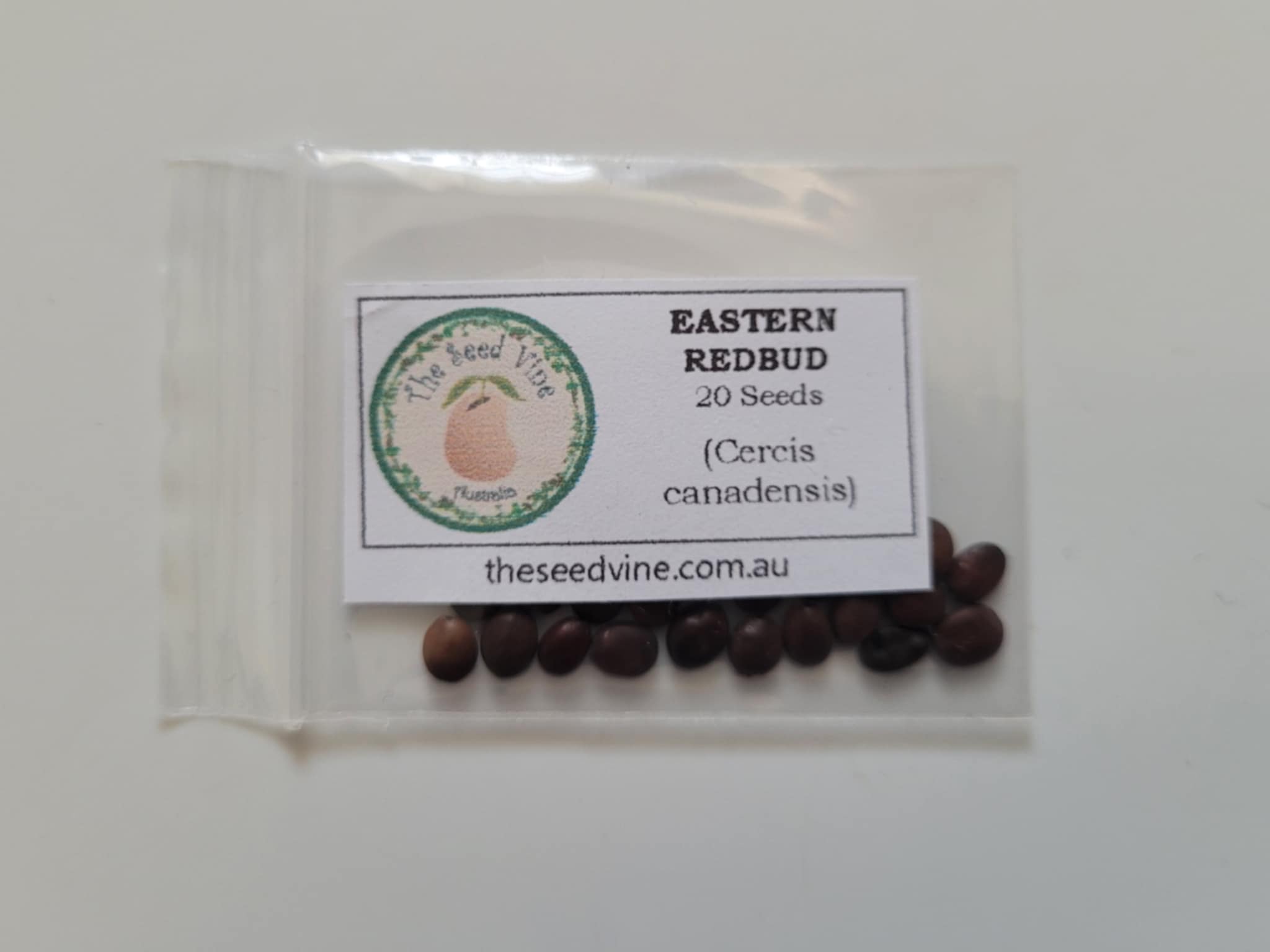
Cercis canadensis (Eastern Redbud) is a small deciduous tree that is native to southern Canada, the eastern United States right down to Mexico. The Eastern Redbud produces hundreds of pink and crimson edible flowers during spring. They are hardy, frost tolerant and make an impressive feature or driveway tree. It is also a highly sought after species for bonsai growing.
Suitable for Temperate and Sub-Tropical climates.
Other common names include Spicewood Tree, Mexican Redbud and Texan Redbud. The Eastern Redbud is part of the same genus as Cercis siliquastrum which is also part of our range.
Growth
Cercis canadensis is a beautiful flowering tree that reach heights of up to 12 metres (39 feet). Eastern Redbud blossoms uniquely appear before the leaves and grow in dense clusters.
Flowers can appear on trees that are one year old and grow off the trunk and branches. Each blossom has five free petals that combine with fused petals. The petals are edible and apparently have a sweet-acidic taste. The trees produce flat pods that hang vertically and contain between 20-50 seeds each.
Eastern Redbud trees have an unusual relationship with bacteria in the soil. Together they produce nitrogen that is emitted into the atmosphere which can benefit the plants nearby.
Note: Germination instructions can be found in the ‘Germination Instructions Tab’ below. Upon purchase you will receive these detailed instructions via email so that you have a permanent record.
FAMILY:
Fabaceae
CLIMATE:
Temperate – Tropical
TEMPERATURE RANGE:
-15 to 35°C / 5 to 95°F
SOIL TYPE:
Soil must be well-draining.
LOCATION:
Full Sun – Part Shade
HEIGHT:
Up to 12 metres (39 feet)
WIDTH:
Up to 10 metres (33 feet)
pH:
6.0-7.0
GROWTH TYPE:
Deciduous
WATER REQUIREMENTS:
Medium
POLLINATION:
Bees
MATURITY:
3-5 years
GERMINATION RATES:
55-70%
GERMINATION TIME:
Cold stratification for 2 months, post sowing germination from 1-3 weeks.
GERMINATION DIFFICULTY:
Medium
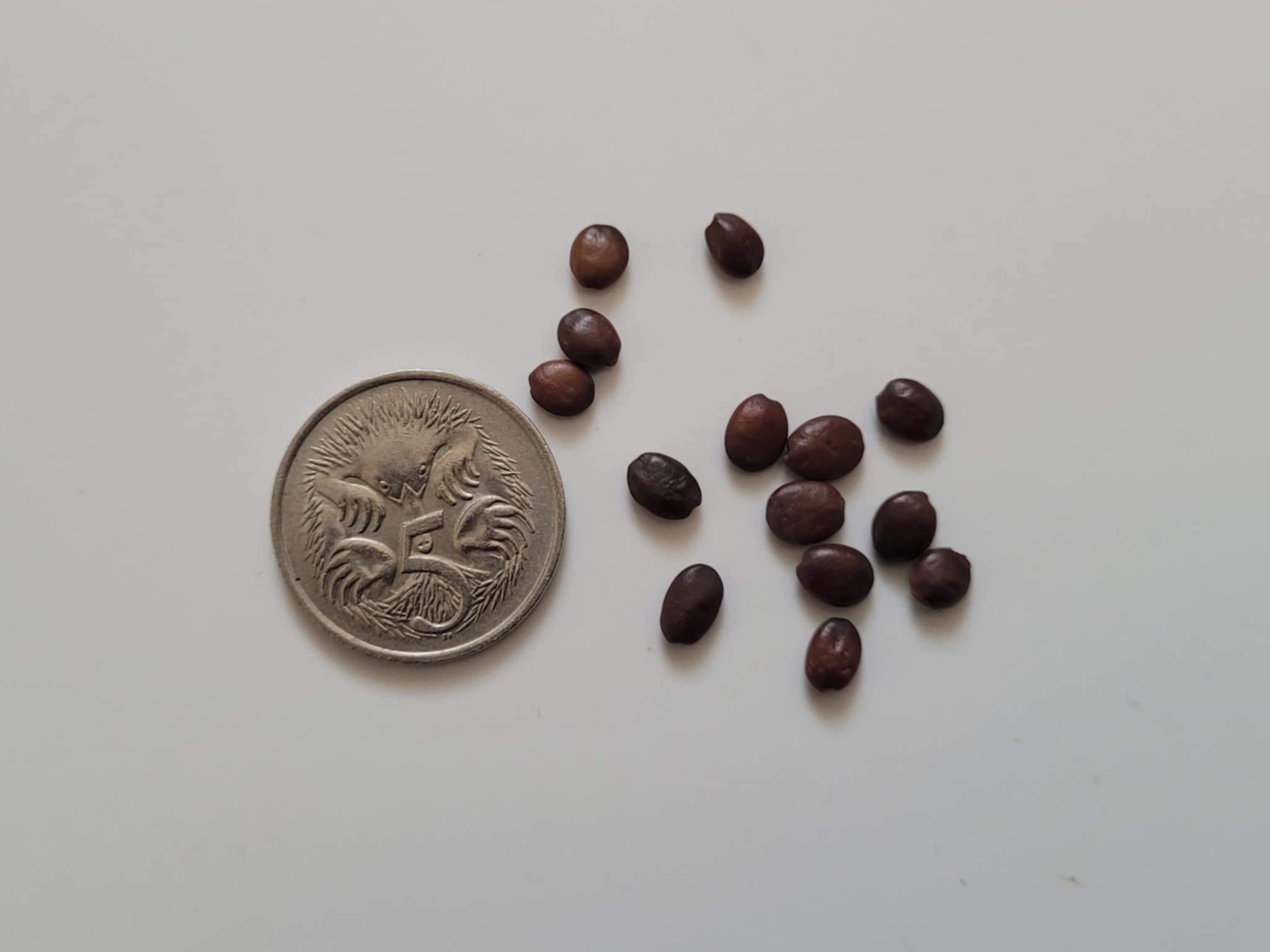
SEEDS PER GRAM:
Approximately 40
MEDICINAL QUALITIES:
No
WEED POTENTIAL:
No
EDIBLE:
Yes
SEED STORGE & VIABILITY:
Cold Storage at 4°C (Fridge) up to 5 years.
FACTS ABOUT CERCIS CANADENSIS (Eastern Redbud)
The flowers of Cercis canadensis cannot be pollinated by short-tongued bees as they aren’t able to reach the nectaries. Instead, long-tongued bees such as the blueberry or carpenter bees are responsible for most of this species’ pollination.
Timber from the Eastern Redbud is hard and heavy weighing around 18kg (40lb) per cubic foot. It takes a fine polish and is used to make furniture and wooden tools.
The green twigs of the Eastern Redbud are used as seasoning by the Appalachians while other native American tribes consume the flowers raw or boiled and consume the seeds roasted.
Cercis canadensis is the state tree of Oklahoma.
For more information regarding the Eastern Redbud please click here.