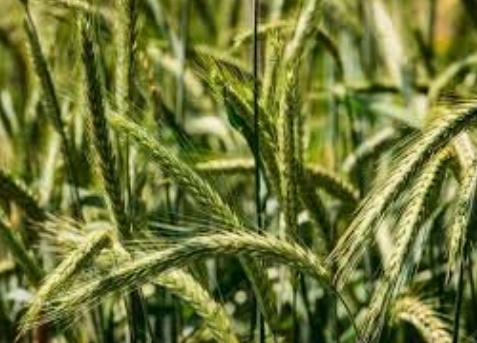
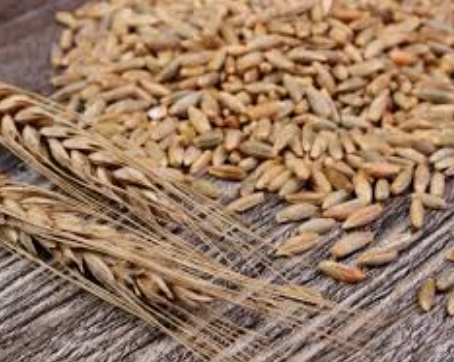
Secale cereale (Rye) is an important annual grain crop that is native to eastern Europe but has become popular throughout the temperate world. Rye adapts to a wide variety of growing conditions and is used to feed livestock, make beer, whiskey and bread and as a green manure to improve soil quality.
Suitable for Cold and Temperate climates.
Growth
Secale cereale is an edible plant that grows to 3 metres (10 ft) that is sown in winter or colder climates where more popular grains such as Wheat won’t succeed. Rye is frost tolerant, requires little watering and provides good cover and forage over the winter months.
Unlike most grains, Rye is able to succeed in boggy, low-fertile, drought-affected and even sandy soils which makes it popular for farmers with unproductive acres.
Rye can be sown in the winter or spring as soon as the soil can be easily broken up. Farmers wait until the leaves have died off and the grain has become hard to begin harvesting which can take between 120-150 days.
Note: Germination instructions can be found in the ‘Germination Instructions Tab’ below. Upon purchase you will receive these detailed instructions via email so that you have a permanent record.
FAMILY:
Poaceae
CLIMATE:
Cold, Temperate, Sub Tropical
TEMPERATURE RANGE:
-30 to 25°C / -22 to 77°F
SOIL TYPE:
Most soil types that are weed free.
LOCATION:
Full Sun.
HEIGHT:
Up to 3m (10 feet)
WIDTH:
Up to 10 cm (4 inches)
pH:
5.0-7.0
GROWTH TYPE:
Annual or Biennial
WATER REQUIREMENTS:
Light
POLLINATION:
Wind.
MATURITY:
120-150 days
GERMINATION RATES:
65-75%
GERMINATION TIME:
7-10 days
GERMINATION DIFFICULTY:
Easy
SEEDS PER GRAM:
Approximately 60 seeds
MEDICINAL QUALITIES:
Yes
WEED POTENTIAL:
No
EDIBLE:
Yes
SEED STORAGE & VIABILITY:
Cold Storage at 4°C (Fridge) up to 7-10 years.
FACTS ABOUT SECALE CEREALE (Rye)
The growing gluten-free trend has increased the importance of Rye. Although it does contain gluten, many patients that are allergic to Wheat can tolerate Rye breads.
One indication of how adaptable Rye is in colder climates, is that the world’s highest producers are countries such as Germany, Poland and Russia.
As a food, Rye is a rich source of Zinc, Dietary Fibre, Magnesium, Phosphorus and Manganese. It is also a good source of protein and widely studied for its regulation of blood sugar and cholesterol.
Some historical accounts suggest that Rye was among the first crops cultivated in the Euphrates Valley in Northern Syria as far back as 13,000 years ago.