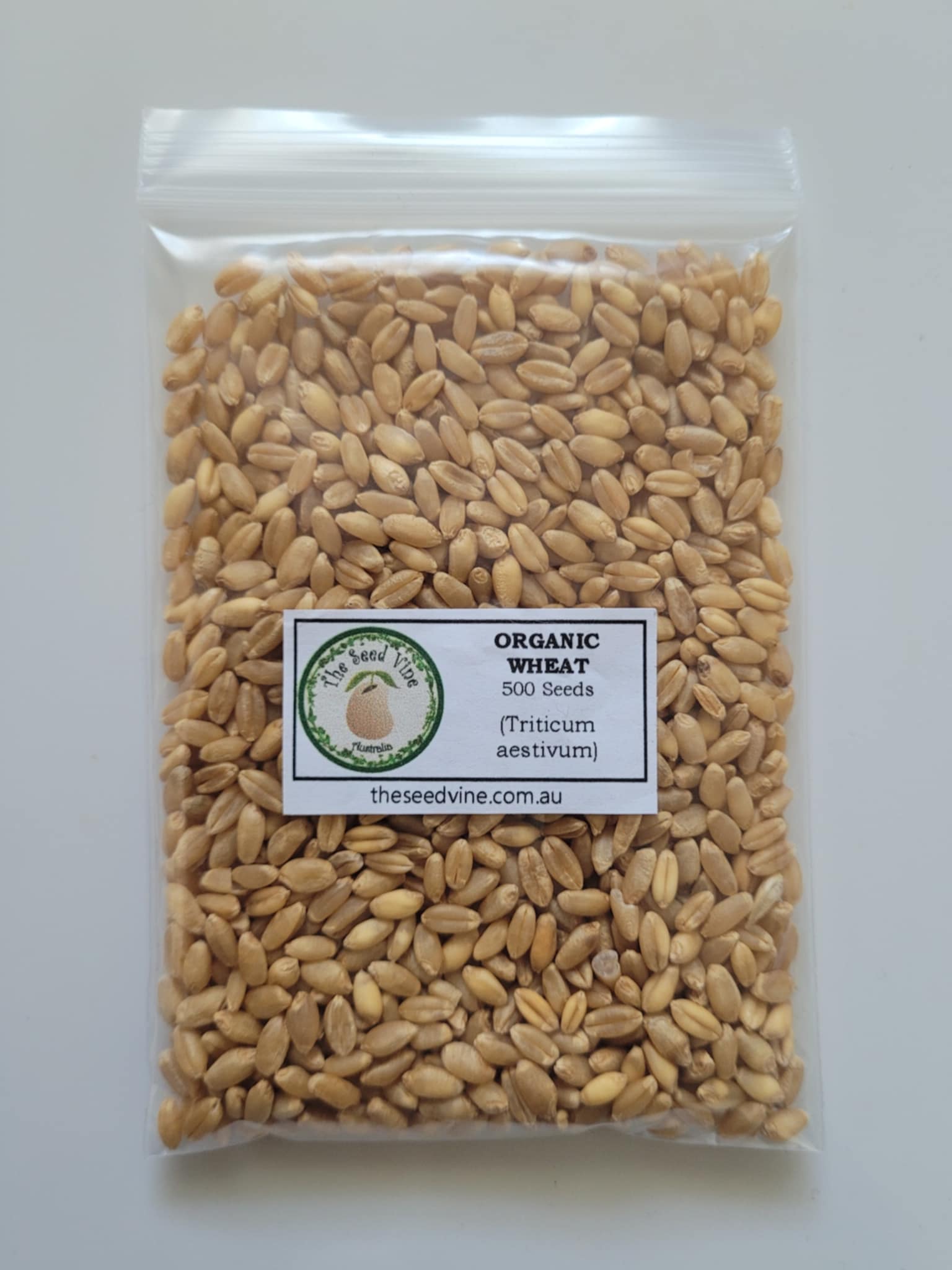
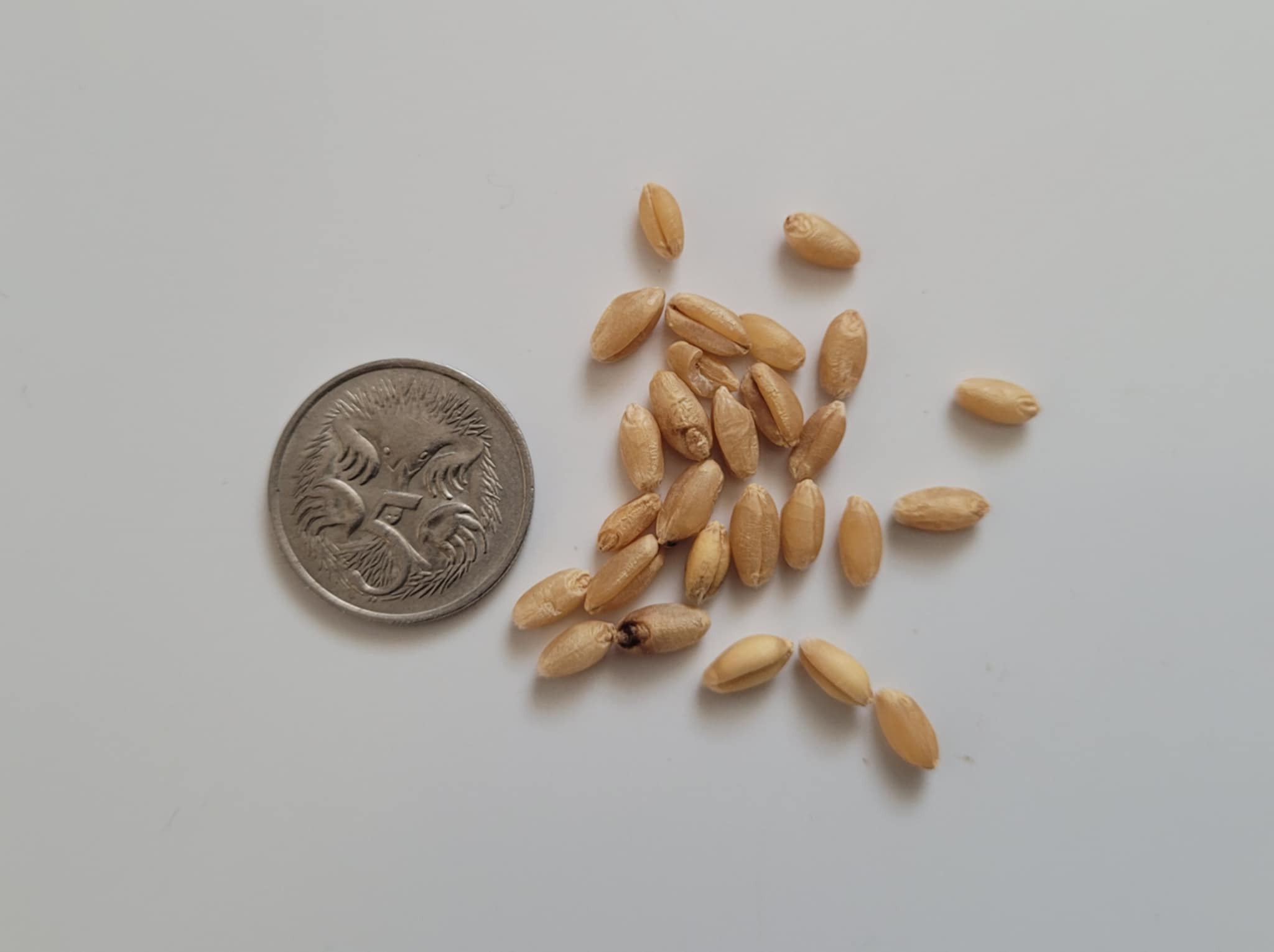
Triticum aestivum ( Wheat ) is an important annual grain crop that is believed to be native to Middle East, northern Africa and Eastern Europe. More land is dedicated to grow Wheat than any other food crop in the world. It is easy and fast to grow, helps to improve soil quality and the crop’s long storage ability has made Wheat an essential food source for many countries.
Suitable for Temperate climates.
Growth
Triticum aestivum is an edible plant crop that grows to 1.5m (5 ft) that is sown in Winter or Spring in temperate regions around the world. Depending on the season the Wheat is sown, the plant itself shows varied characteristics. For example, Winter Wheat may have up to 15 leaves per shoot while Spring Wheat rarely more than 10.
Seed is sown directly onto the ground where full sun is available and the soil has been removed of weeds. After a solid watering in, Wheat performs best when little moisture is provided until the plant begins to flower. A period of regular watering is required to increase the yield and then a few dry weeks allow the seeds to harden.
When Wheat is sown in Spring, it can take around 100-130 days while ‘Winter Wheat’ can take between 180-250 days.
Note: Germination instructions can be found in the ‘Germination Instructions Tab’ below. Upon purchase you will receive these detailed instructions via email so that you have a permanent record.
FAMILY:
Poaceae
CLIMATE:
Temperate, Sub Tropical
TEMPERATURE RANGE:
5 to 25°C / 41 to 77°F
SOIL TYPE:
Most soil types.
LOCATION:
Full Sun.
HEIGHT:
Up to 1.5m (5 feet)
WIDTH:
Up to 15cm (6 inches)
pH:
5.5-7.5
GROWTH TYPE:
Annual.
WATER REQUIREMENTS:
Light
POLLINATION:
Wind.
MATURITY:
100-130 days (Spring) 180-250 days (Winter)
GERMINATION RATES:
75-85%
GERMINATION TIME:
7-10 days
GERMINATION DIFFICULTY:
Easy
SEEDS PER GRAM:
Approximately 20 seeds
MEDICINAL QUALITIES:
No
WEED POTENTIAL:
No
EDIBLE:
Yes
SEED STORAGE & VIABILITY:
Cold Storage at 4°C (Fridge) up to 5 years.
FACTS ABOUT TRITICUM AESTIVUM (Wheat)
Throughout the Bronze Age, the Britain used wheat straw in roofing which was commonplace until the late 19th century.
Quickly after the first grain elevator was built in Buffalo, USA in 1842 the cost of transport around the world fell dramatically. To transport a bushel from Chicago, USA to Liverpool, UK cost around 37 cents in 1869 but fell to 10 cents by 1905. Wheat, through bread, became a staple across the developed world when previously oats, barley and rye were far more popular.
Global trade in Wheat is greater than all other crops combined while the land used to grow the crop worldwide is larger than Greenland. In 2021, a staggering 545 million acres was dedicated globally to grow Wheat.