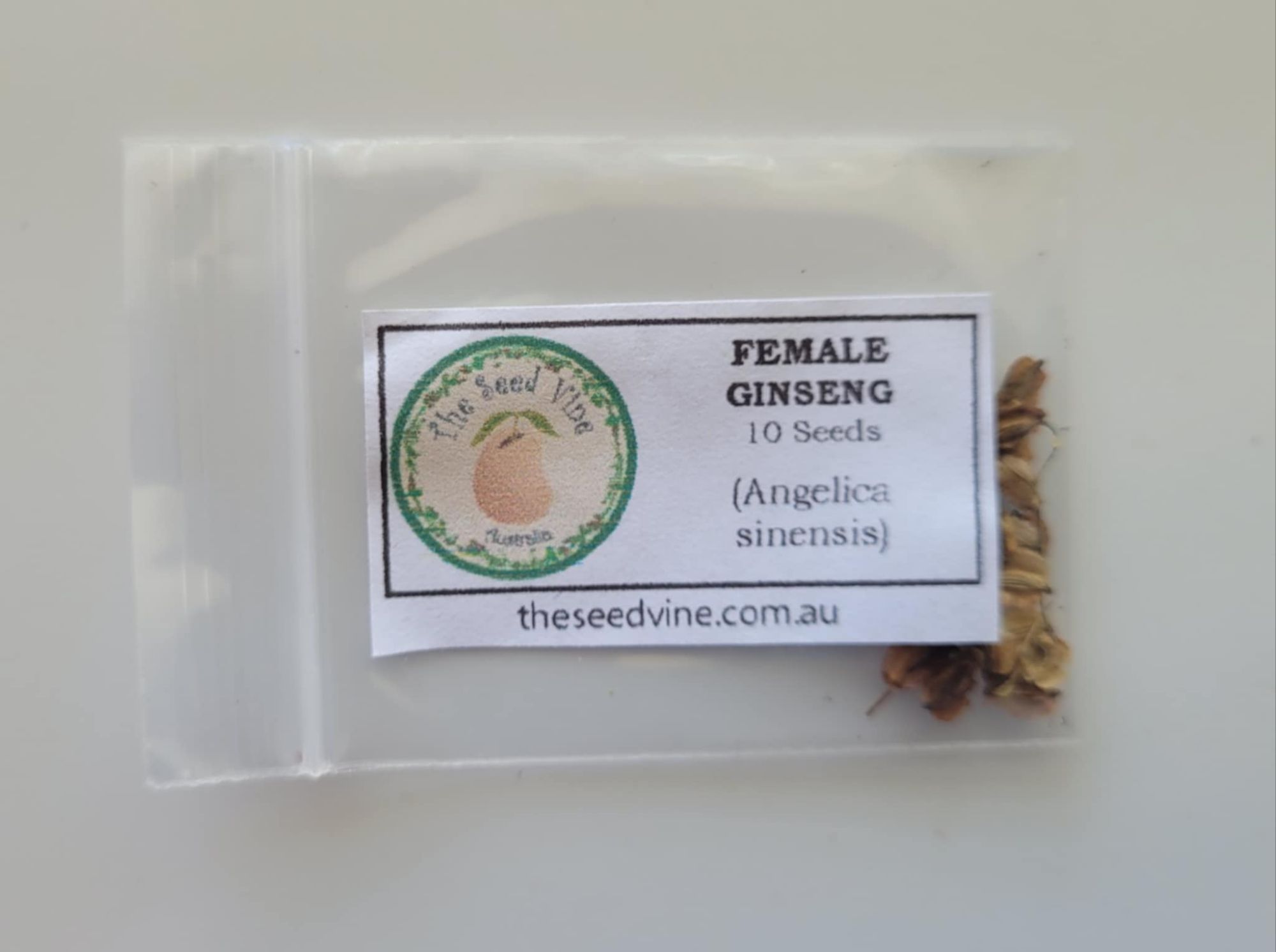
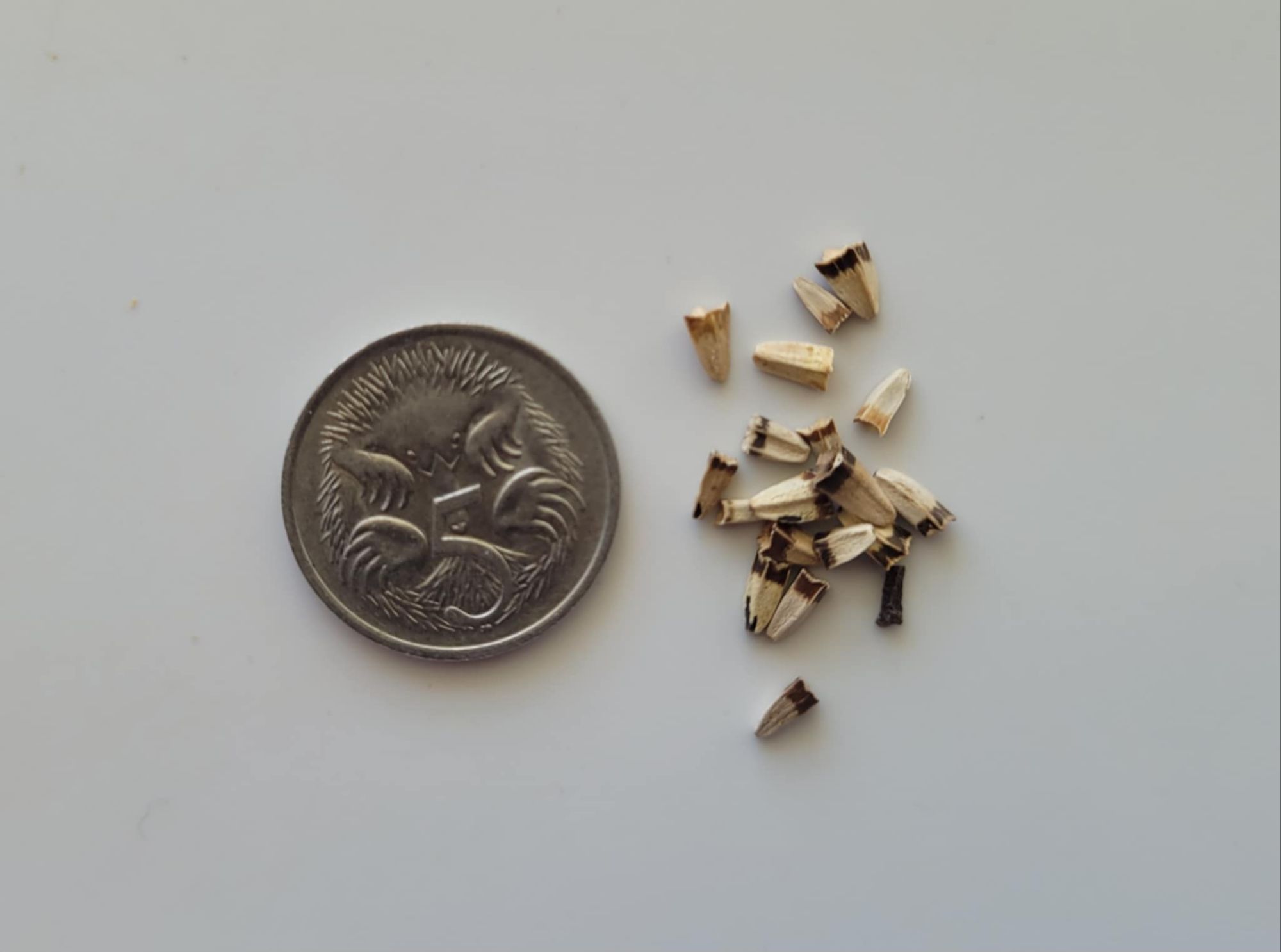
Angelica sinensis ( Female Ginseng ) is a perennial herb that is native to mountainous regions of China, Korea and Japan. For thousands of years Female Ginseng has been used in traditional Chinese medicine and is a main ingredient in the Woman’s Tonic called Four Things Soup. It’s hardy, fairly low-maintenance and also produces beautiful white flowers during autumn.
Suitable for Temperate and Sub-Tropical climates.
This species is also commonly known as Dong Quai, Dang Gui or simply Angelica Root.
Angelica sinensis is known as the Female Ginseng because many of the health conditions it is used to treat occur in women. The plant has been used for menstrual cramps, anaemia associated with menstruation, pregnancy, premenstrual syndrome (PMS), pelvic pain, recovery from childbirth or illness, and fatigue or low energy. In both men and women, Female Ginseng has been used to treat heart conditions, high blood pressure, inflammation, headache, infections, and nerve pain. Though traditional Chinese medicine has used Female Ginseng for over 4000 years, the World Health Organisation has advised caution regarding the herb especially around pregnancy.
Click here to view our full range of herbs.
Growth
Angelica sinensis grows approximately 30-80 cm’s tall and 12-30 cm’s wide and bears thin green leaves that stretch to around 8 cm’s in length.
Female Ginseng is a hardy perennial that generally grows up to a height of 1 metre (3 feet) and rarely wider than 70cm (2 feet 4 inches). Being native to China, the plant is hardy and enjoys rich moist soils throughout the year. White flowers appear during early autumn and form umbrels that are supported by purplish stems. These flowers are great at attracting insects during a time of year when less pollen is around.
Seeds then drop during springtime but the primary reason for growing Female Ginseng is their medicinal roots which aren’t ready for harvesting until their third season.
Note: Germination instructions can be found in the ‘Germination Instructions Tab’ below. Upon purchase you will receive these detailed instructions via email so that you have a permanent record.
FAMILY:
Apiaceae
CLIMATE:
Temperate and Sub Tropical.
TEMPERATURE RANGE:
-5 to 38°C / 23 to 100°F
SOIL TYPE:
Moist and well-draining.
LOCATION:
Full Sun – Part Shade
HEIGHT:
Up to 1 metre (3 feet)
WIDTH:
Up to 70cm (2 feet 4 inches)
pH:
6.5-8.5
GROWTH TYPE:
Perennial.
WATER REQUIREMENTS:
Medium.
POLLINATION:
Pollinated by bees or self-fertile. Bisexual, meaning both male and female parts are present on the same flower.
MATURITY:
3 years for roots.
GERMINATION RATES:
75-80%
GERMINATION TIME:
4-6 weeks
GERMINATION DIFFICULTY:
Easy-Medium
SEEDS PER GRAM:
Approximately 650
MEDICINAL QUALITIES:
Yes
WEED POTENTIAL:
Not known
FACTS ABOUT ANGELICA SINENSIS (Female Ginseng)
Unlike many of the traditional medicinal herbs, Angelica sinensis has had quite a number of studies done that have shown great results in a range of different ailments. Here is an overview of some of the results found.
Female Ginseng is a medicinal herb that has a wide range of health benefits that have been known to assist with depression, menopause, bones, heart disease and reduces inflammation.
One source mentioned Female Ginseng as a method to combat alcoholism since it produces a disgust for liquor.