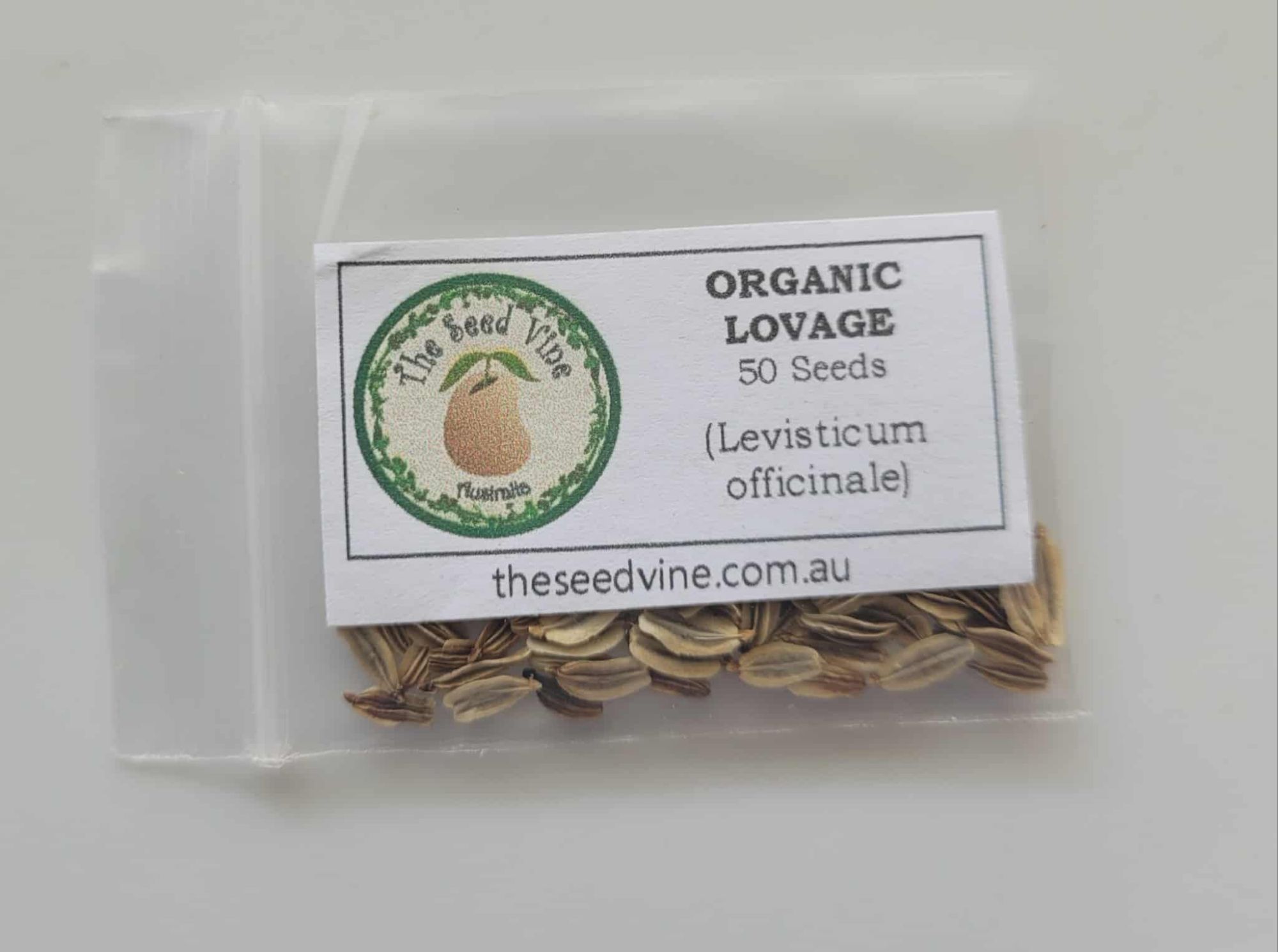
Levisticum officinale (Lovage) is a perennial herbaceous plant that is native to Afghanistan and Iran but has been grown in Europe for centuries. As well as an essential oil, the roots of Lovage is grown as a vegetable, the leaves are used as a herb and the seeds have a similar flavour to celery and parsley but are spicier.
Suitable for Temperate, Dry and Sub-Tropical climates.
Levisticum officinale is a versatile plant that is now used around the world in culinary dishes as a substitute for Celery seeds or for Parsley leaves. Medicinally, the plant has a wide range of applications but is mostly recommended for bladder and kidney stones and issues with the urinary tract.
The plant itself is related to Carrots, Celery and Parsley and grow similar umbel-styled flowers. Leaves of Lovage can be used in salads, soups and broths, the roots eaten like a vegetable or also grated to be added to salads. The seeds are used as a spice in a similar way to fennel seeds.
To view our full range of herbs click here.
Growth
Levisticum officinale is an upright, perennial herb plant that grows to a height of around 2 metres (7 feet) by a width of around 1 metre (3 feet). Commercially, the plants are spaced at around 70cm apart to achieve adequate airflow and highest possible yields. Lovage enjoys a good quality soil with good drainage, a warm, sunny position but can also tolerate part-shade.
As a perennial from a native region that experiences cold winters, Lovage tolerates fairly heavy frosts by dying back over Winter before recovering during the Spring.
The stems and leaves are similar to Celery and have a similar smell when crushed. Larger basal leaves can grow up to 70cm (2 feet) long are tripinnate with acutely pointed leaflets with few marginal teeth. Flowering occurs from late-Spring on plants that are in their third growing season and are tiny, yellow blooms on globose umbels up to 15cm (6 inches) in diameter.
Harvesting of the leaves can occur from around 90 days. At this young immature stage the leaves are fresh and tasty. However, in future growing seasons as the plants mature, leaves should be harvested prior to flowering to avoid them becoming overly bitter.
Note: Germination instructions can be found in the ‘Germination Instructions Tab’ below. Upon purchase you will receive these detailed instructions via email so that you have a permanent record.
FAMILY:
Apiaceae
CLIMATE:
Temperate to Tropical
TEMPERATURE RANGE:
-10-30°C / 14-86°F
SOIL TYPE:
Well-draining.
LOCATION:
Full Sun or Part-Shade
HEIGHT:
Up to 2m (7 feet)
WIDTH:
Up to 1m (3 feet)
pH:
6.0-7.0
GROWTH TYPE:
Perennial.
WATER REQUIREMENTS:
Light
POLLINATION:
Bees and Insects
MATURITY:
Leaves within 90 days but flowering can take up to 3 years.
GERMINATION RATES:
75-90%
GERMINATION TIME:
7-21 days at temperatures between 20-25°C / 68-77°F
GERMINATION DIFFICULTY:
Easy
SEEDS PER GRAM:
Approximately 350
MEDICINAL QUALITIES:
Yes
WEED POTENTIAL:
Yes.
EDIBLE:
Yes.
SEED STORAGE & VIABILITY:
Cold Storage at 4°C (Fridge) up to 3 years.
FACTS ABOUT LEVESTICUM OFFICINALE (Lovage)
In written texts from around 800 AD, Levesticum officinale was cultivated on the agricultural properties of historical figure Charlemagne, King of the Franks.
The term lovage is from “love-ache” with ache being a medieval name for parsley.
In Ukraine, Lovage is considered an aphrodisiac where women rinse their hair with an infusion of the leaves to attract men with its spicy aroma. An alcoholic cordial made of Lovage is traditionally added to brandy in the United Kingdom and was particularly popular in Cornwall where it was added to disguise the taste of salty, smuggled and spoiled brandy.
Lovage is said to have antiseptic qualities and was used throughout medieval times to line shoes and revitalise tired feet. A similar effect is used in modern times, when added to a hot bath to ease aches and to clean the skin. Many people use lovage to aid digestion and relieve wind from either a tea made from the leaves or by steeping the seeds in brandy and drinking as a digestif after a meal.
For more information regarding Lovage please click here.