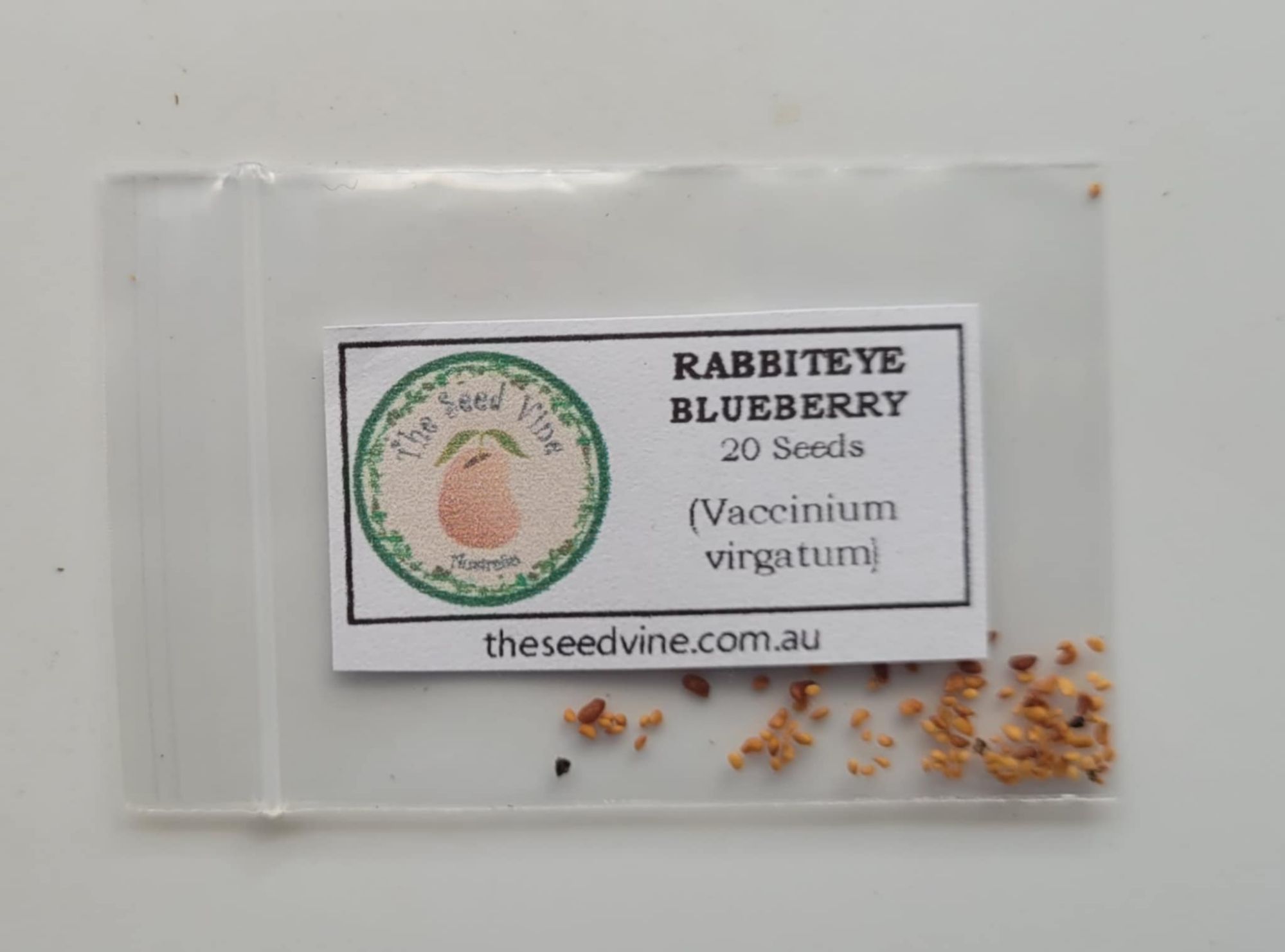
Vaccinium virgatum ( Rabbiteye Blueberry ) is a deciduous, fruiting plant that is native to the south eastern United States, particular states such as Georgia and South Carolina. Unlike most Blueberry varieties, the Rabbiteye grows and fruits well in warmer climates. But they remain frost tolerant and also produce the beautiful coloured leaves during Autumn.
Suitable for Temperate and Sub-Tropical climates.
Vaccinium virgatum is known by many common names including Swamp Blueberry, Southern Highbush Blueberry, Smallflower Blueberry and Southern Black Blueberry. It is native to most of the south-eastern states of USA from North Carolina down to Florida and as far west as Texas. The climates in these regions closely resemble those in Sydney and Brisbane as compared to the most Blueberry varieties which would prefer Tasmania, Melbourne or Canberra type environments.
For other Blueberry varieties species, please check out Blueberry Wild Lowbush and the Blueberry Northern Highbush. To view our range of fruit seeds please click here.
Growth
Vaccinium virgatum is a deciduous woody shrub that can grow up to 4 metres (14 feet) tall by about 1 metre (3 feet) wide. Rabbiteye Blueberry thrives in acidic soils that remain moist but not boggy and enjoy a position in full sun. Plants are frost tolerant and although they don’t require much water, they produce more fruit if provided plenty during the Spring and Summer months.
Rabbiteye Blueberry is not self-fertile and requires two or more varieties of Rabbiteye Blueberry plants to pollinate, flower and to produce fruit. The Rabbiteye Blueberry seeds supplied here are harvested from a mix of Rabbiteye types to ensure our customers are able to achieve cross-pollination. They are pollinated by bees so growing plants nearby that are attract bees is highly recommended as it will increase fruit production.
Although the plants can begin to fruit within their second full season, commercial growers will often prune the flowers at this time to concentrate the shrubs energy into growing stronger roots and stems. This can increase the likelihood of producing good harvests from the third or fourth season.
The leaves of the Rabbiteye are spirally arranged, oblate to narrow elliptic and can grow to around 8cm (3 inches) long. During Autumn they go orange, red and then fall off to protect the plant over the colder months of Winter. Flowers are white, shaped like little bells and can be white or pink.
Due to their acidic soil loving nature, Blueberries suffer from few pests but their fruits are prized targets for birds.
Note: Germination instructions can be found in the ‘Germination Instructions Tab’ below. Upon purchase you will receive these detailed instructions via email so that you have a permanent record.
FAMILY:
Ericaceae
CLIMATE:
Temperate and Sub-Tropical.
TEMPERATURE RANGE:
-10°C to 35°C / 14 to 95°F
SOIL TYPE:
Well-draining, sandy loam that is high in organic matter. Blueberries don’t do well in clay soils.
LOCATION:
Full Sun
HEIGHT:
Up to 4 metres (14 feet)
WIDTH:
Up to 1 metre (3 feet)
pH:
4.5-5.5
GROWTH TYPE:
Deciduous Perennial
WATER REQUIREMENTS:
Medium.
POLLINATION:
Pollinated by Bees & other insects. Requires two other plants to cross-pollinate.
MATURITY:
2-4 years.
GERMINATION RATES:
60-80%
GERMINATION TIME:
Cold Stratification – 3 months and then 6-12 weeks germination
GERMINATION DIFFICULTY:
Medium. Cold stratification & patience required.
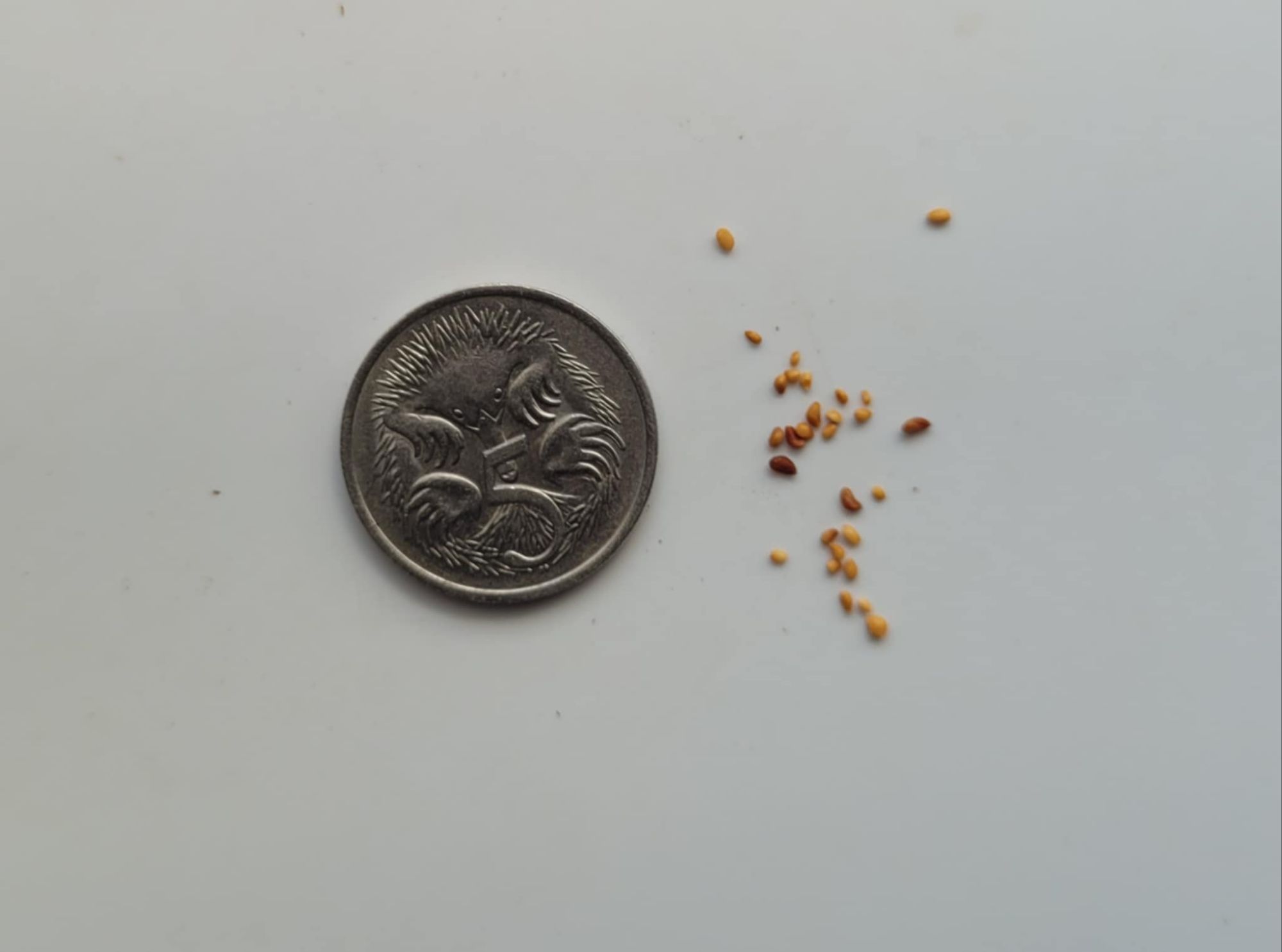
SEEDS PER GRAM:
Approximately 300
MEDICINAL QUALITIES:
Yes.
WEED POTENTIAL:
No.
EDIBLE:
Yes.
SEED STORAGE & VIABILITY:
Cold Storage at 4°C (Fridge) up to 3 years.
FACTS ABOUT VACCINIUM VIRGATUM ( Rabbiteye Blueberry )
Blueberries were first commercially grown in Australia in 1974. The three main species used are Vaccinium corymbosum, Vaccinium angustifolia and Vaccinium virgatum. For colder climates, such as those in Victoria and Tasmania, Vaccinium corymbosum is chosen due to their high chill hour requirements.
Vaccinium virgatum and Vaccinium angustifolia is used commercially in Australia just north of Coffs Harbour in New South Wales and in some farms across northern NSW and southern Queensland.
Blueberries are well known as a superfood. They can be used in sauces and syrups as well as backed into pies, pancakes and muffins. Blueberries are highly nutritious as rich sources of Vitamins C & K and are a great source of antioxidants, dietary fibre, iron & manganese.
For more information about the Rabbiteye Blueberry please click here.